astrology manifestation
Lions Gate Portal Manifestation With Dream-Self Audio
A quiet lions gate portal manifestation guide using Dream-Self audio for August 8, with timing, prompts, ritual steps, and grounded notes you can repeat.

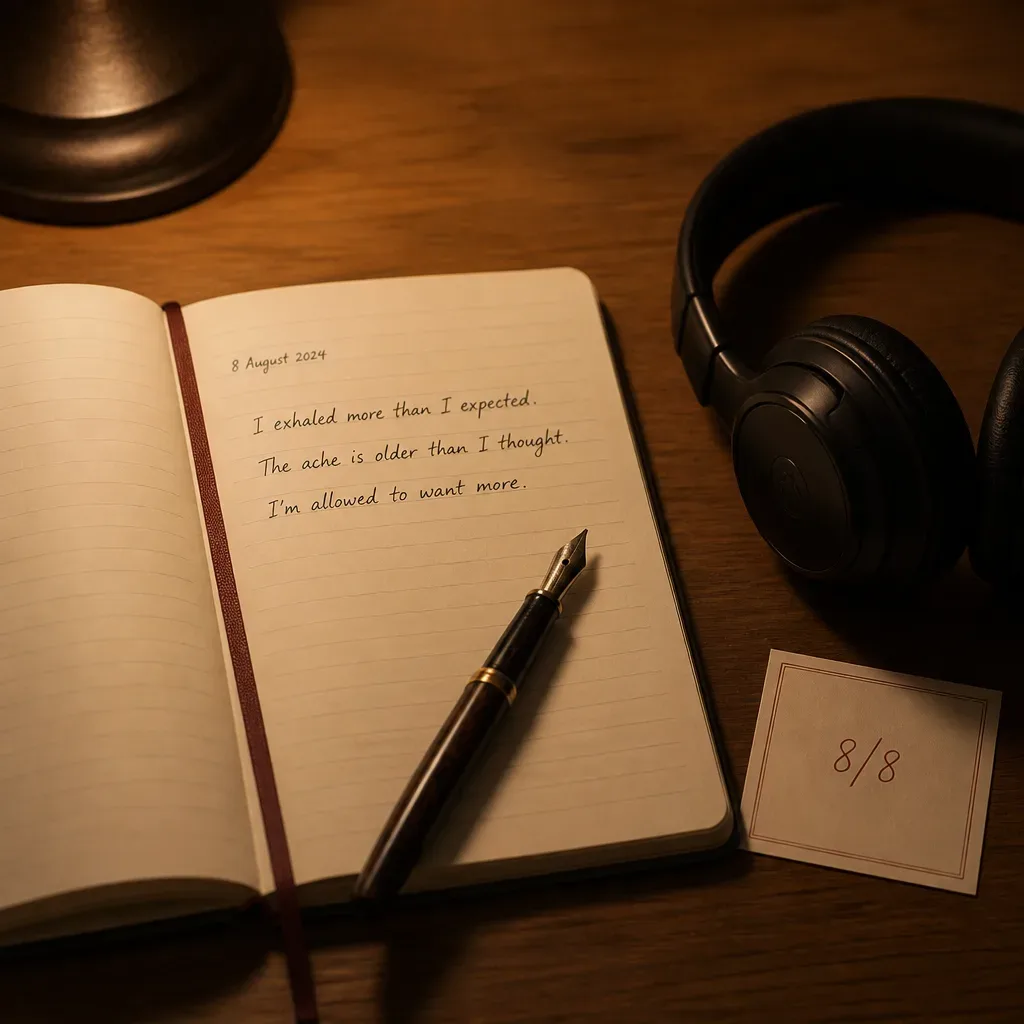
The room is still. Your headphones are on the table. Lions gate portal manifestation works best when you keep it simple: use August 8 as a symbolic focus point, listen to a short Dream-Self audio, write what felt true, then take one small action before the day ends.
What is lions gate portal manifestation, really?
Lions gate portal manifestation is a symbolic August 8 practice that uses timing, attention, and repetition to clarify one intended future.
The phrase usually points to three things at once: Leo season, the date 8/8, and the old star story around Sirius. Sirius is the brightest star in the night sky and sits about 8.6 light-years from Earth, according to NASA. Its heliacal rising, when it returns to visibility near dawn, mattered in ancient Egyptian calendrical traditions because it arrived near the Nile flood season. Modern Lions Gate practice borrows from that memory, then adds numerology and intention work.
That doesn’t mean you need to pretend the sky is a vending machine. The date is a container. The work is attention. Pew Research Center reported in 2018 that about 29% of U.S. adults said they believed in astrology, which tells you something useful: many people want timing to feel less random. A ritual gives the mind a place to stand.
If you already work with astrology and manifestation, think of this date as a soft appointment, not a command. The Sun is usually in Leo from about July 22 to August 22. The number 8, repeated as 8/8, is often read as continuity, return, and material form. You can honor the symbol without giving away your agency.
A date can mark a door, but your attention is what walks through.
The quiet version of Lions Gate is not dramatic. You don’t need a crowded altar. You don’t need perfect belief. You need one honest desire, one listening practice, and one action that makes your future self less theoretical.
Why use Dream-Self audio instead of a long ritual?
Dream-Self audio keeps the practice repeatable, which matters more than making the ritual elaborate.
The AYA Method is a daily audio manifestation practice. Each day you listen to a short personalized recording — your Dream-Self Moment — narrated from the version of you who has already manifested the life you intend. Listening is the practice. Repetition is the work. The audio is the method.
That structure matters on August 8 because Lions Gate can attract too many instructions. Burn this. Write that. Wake at 5:55. Do 88 lines. Then the ritual becomes noise. Audio reduces the surface area. You listen. You let the future self speak in first person. You notice what your body accepts and what it refuses.
There is a practical reason for this. In behavior research, repetition is one of the quiet engines of change. A 2009 study by Phillippa Lally and colleagues in the European Journal of Social Psychology found that habit formation took 66 days on average, with wide variation from 18 to 254 days. One date can begin something. It can’t carry the whole thing alone.
Dream-Self audio also uses auditory attention. Dr. Andrew Huberman has often discussed how repeated cues and mental rehearsal can support goal-directed behavior when paired with action. You don’t need to overstate the neuroscience. The simple point is enough: hearing a future in a calm voice can make it easier to rehearse who you’re becoming.
Use the daily affirmation and Manifestation Board as complements if they help. But on this day, let the audio stay at the center. The sentence you hear may do more than the page you decorate.

How should you prepare before August 8?
Prepare by removing friction, choosing one intention, and making the practice small enough to finish.
Start the day before. Ten minutes is enough. Clear one surface. Charge your headphones. Put a notebook where you can reach it. If you use Aya, make sure your Dream-Self Moment reflects the life you intend now, not the one you wanted six months ago. A 2018 Journal of Behavioral Medicine meta-analysis found mindfulness practices were associated with reduced stress across many studies; the useful detail is not perfection, but lowering the inner noise enough to notice.
Choose one intention. Not five. Not a whole life plan. One. If the intention is money, make it specific: steady work, paid invoices, a calmer relationship with pricing. If it’s love, don’t write a fantasy scene you don’t believe. Write the quality of your daily relating. If it’s health, keep it in the language of care, not punishment.
Use this short preparation list:
- Pick a time on August 8, morning or evening.
- Choose one intention in one sentence.
- Set your phone to Do Not Disturb for 12 minutes.
- Place water, headphones, and a notebook nearby.
- Decide the one action you’ll take after listening.
Specificity protects the ritual from becoming theater. Peter Gollwitzer’s research on implementation intentions, often summarized as if-then planning, found that linking a goal to a concrete cue improves follow-through across many settings. So instead of I will open to new work, try: after the audio, I’ll send the proposal before 11 a.m.
If you like visual anchors, add one image to a Manifestation Board. Keep it plain. The board is not the practice. It’s a reminder. For a broader foundation, read the manifestation guide before you start, then come back to the audio.
What is the 12-minute Lions Gate audio practice?
The 12-minute practice is a simple sequence: settle, listen, write, and act.
Here is the version I’d recommend, after testing too many wellness apps and quitting most of them by day three. A short ritual has better odds. The app analytics world has a harsh lesson here: many consumer apps lose a large share of users after the first week, and public mobile retention benchmarks often place day-30 retention below 10% for broad categories. The practice has to fit a real life.
| Minute | What you do | Why it helps |
|---|---|---|
| 0–2 | Sit, breathe slowly, name the date | Your nervous system gets a clear start cue |
| 2–7 | Listen to your Dream-Self Moment | The intended life becomes spoken and specific |
| 7–10 | Write three short lines | You catch what landed and what didn’t |
| 10–12 | Choose one next action | The ritual moves into behavior |
Before you press play, say the intention once. Quietly is fine. Then listen without multitasking. No inbox. No candle management. No checking the moon phase halfway through. The audio is not background. It is the appointment.
If you work with affirmations, you can write one line after the audio, but don’t turn the whole practice into copying sentences. The affirmation is a complement. The Dream-Self Moment does the deeper work here because it places the sentence inside a lived scene.
After listening, write these three prompts:
- What did I hear that felt already true?
- What did I hear that I resisted?
- What action would make this slightly more real today?
James Pennebaker’s expressive writing studies often used 15 to 20 minutes over several days, but you don’t need that much for this ritual. Three minutes is enough to catch the signal. The point is not to produce beautiful writing. The point is to see where belief met resistance.
The practice is working when it makes the next honest action easier to see.
What should your Dream-Self script include?
Your Dream-Self script should include a clear scene, a believable voice, and one behavior that proves the change.
The best script does not flatter you. It recognizes you. It sounds like a future self who knows your private language and isn’t trying to sell you anything. If your words feel inflated, your body may reject them. If they feel too small, they may not call you forward. The middle is where the work lives.
Use four parts:
- A present-tense opening. I wake up knowing what matters today.
- A concrete scene. The email is sent. The room is quiet. My calendar has space.
- A felt shift. I don’t rush to prove myself.
- A next behavior. I choose the honest task first.
Specific words matter. Cognitive science often notes that mental imagery recruits some of the same neural systems used in perception and action, though it is not a substitute for doing the thing. In sport psychology, mental rehearsal has been studied for decades; results vary by task, but combining rehearsal with physical practice tends to outperform rehearsal alone. That is the line to respect.
Don’t write a script that floats above your life. If you want a new home, mention the key in your hand or the table where you drink coffee. If you want steadier work, mention the invoice, the client call, the rate you no longer apologize for. If you want love, mention how you speak when you’re not afraid of being too much.
Here are lines that usually work better than grand claims:
- I know how to receive what is already mine to care for.
- I move at the pace that keeps me honest.
- I choose the first true action before I ask for another sign.
- I can be changed by repetition without making a spectacle of it.
For more context on pairing star timing with grounded practice, keep this astrology and manifestation primer nearby. It helps separate symbol from superstition.
How do you keep the practice grounded after the portal?
You keep it grounded by repeating the audio for seven days and measuring behavior, not mood.
August 8 can feel charged because you gave it meaning. That’s allowed. But the next morning will still ask for ordinary things: breakfast, messages, laundry, care. This is where many rituals fail. They peak, then vanish. A seven-day follow-up gives the intention a small track to run on.
Use one metric. If your intention was creative work, track minutes spent on the draft. If it was money, track the invoice sent or the application submitted. If it was love, track the conversation you didn’t avoid. In a 2020 paper in Psychological Bulletin, goal-monitoring research continued to show that checking progress can support goal attainment, especially when the measure is tied to action.
Try this seven-day rhythm:
| Day | Practice | Proof |
|---|---|---|
| 1 | Listen on August 8 | One action before sleep |
| 2 | Listen again | Remove one delay |
| 3 | Listen and write one line | Ask for what you need |
| 4 | Listen while walking slowly | Finish one open loop |
| 5 | Listen before work | Choose the hard honest task |
| 6 | Listen at night | Name what changed |
| 7 | Listen and review | Keep, edit, or release the intention |
This is also where the AYA Method is useful beyond a date. It doesn’t ask you to keep inventing a new ritual. It asks you to listen daily. Repetition is less glamorous than revelation. It is also kinder to your nervous system.
If you want to pair the practice with a visual note, add one image after the seven days, not before. Let the listening tell you what belongs on the board. Let behavior edit the dream.
What mistakes should you avoid on August 8?
Avoid making the date responsible for work that belongs to your attention, choices, and repetition.
The first mistake is overloading the ritual. If you try to cleanse the room, write 88 lines, record a new script, make a board, pull cards, read five forecasts, and fix your life before breakfast, you’ll likely quit. The nervous system likes clear cues. A 12-minute structure is easier to trust because it ends.
The second mistake is using language you don’t believe. Your Dream-Self audio should stretch you, not insult your current life. If the script says you’re fearless and your real body is scared, soften it: I can act while scared. That sentence has more truth in it. Truth is adhesive. It sticks.
The third mistake is treating astrology as a verdict. Astrology can be a symbolic clock. It can help you ask better questions. It cannot replace consent, skill, practice, rest, or repair. Princeton’s PEAR lab ran mind-matter studies from 1979 to 2007, and its claims remain debated; that history is a useful reminder to stay curious without abandoning discernment.
Keep these boundaries:
- Don’t make financial choices because of a date alone.
- Don’t contact someone who has asked for space.
- Don’t skip care for your body to complete a ritual.
- Don’t confuse intensity with truth.
- Don’t measure the practice by whether you feel different immediately.
If you’re new to the wider practice, start with manifestation basics, then use affirmations only as a supporting thread. The listening comes first here. The action comes right after.
The future self is not a fantasy you perform. It’s a pattern you begin to repeat.
Keep it small enough to return to.