morning rituals
Low Energy Morning Routine With Dream-Self Audio
A low energy morning routine for hard mornings: listen to Dream-Self audio before you get up, then use tiny actions to make the day feel possible.

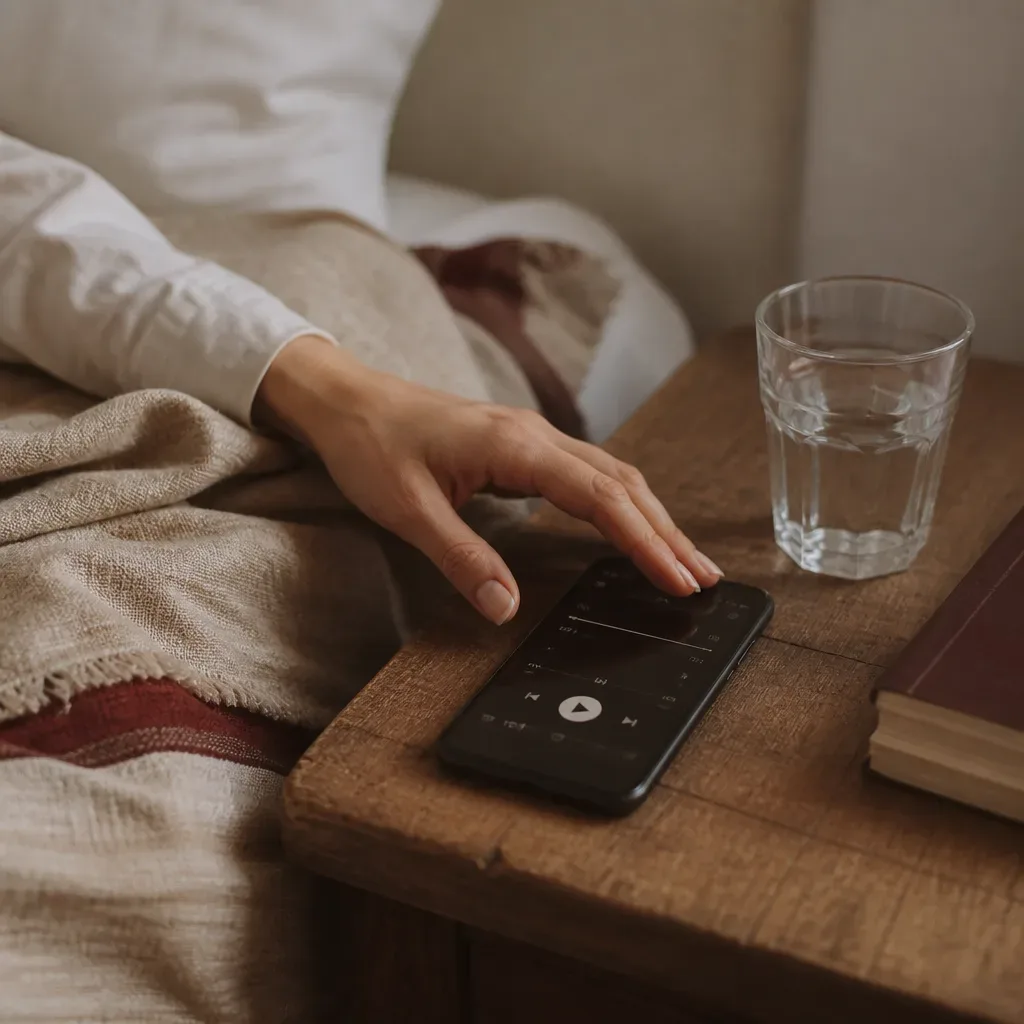
Your phone is beside the bed. Your body has not agreed to the day yet. A low energy morning routine should begin there, not after a perfect rise. Listen to your Dream-Self audio first, then use one or two small body cues to make getting up feel possible.
What is a low energy morning routine, really?
A low energy morning routine is a routine that still works when you do not feel ready.
It is not the cinematic morning. No 5 a.m. performance. No hour of self-improvement before breakfast. It is a set of small, repeatable moves for mornings when your mind is foggy, your body feels heavy, or your calendar has already started speaking too loudly. The CDC says most adults need at least 7 hours of sleep each night, yet many do not get it. A routine that assumes full rest will fail the person who needs it most.
The first principle is simple: lower the entry point. BJ Fogg, the Stanford behavior researcher behind Tiny Habits, has written for years that tiny actions attach more easily to existing moments. Waking up is already an existing moment. You do not have to create a new identity at 6:30 a.m. You have to place one true cue beside the life you already have.
Here is the difference:
| High-demand morning | Low energy morning routine |
|---|---|
| Starts after you get out of bed | Starts before you get up |
| Requires motivation | Requires pressing play |
| Measures mood | Measures repetition |
| Adds many tasks | Keeps one clear next action |
| Breaks when you are tired | Bends with the morning |
A morning you can repeat is worth more than a morning you can only perform.
That is why audio belongs here. The AYA Method is a daily audio manifestation practice. Each day you listen to a short personalized recording — your Dream-Self Moment — narrated from the version of you who has already manifested the life you intend. Listening is the practice. Repetition is the work. The audio is the method.
If you are new to the language of practice, the manifestation pillar gives the wider frame. This piece stays smaller. Bed. Breath. Audio. One next action.
Why start before you get out of bed?
Starting in bed removes the hardest part of the routine: pretending you are already awake.
There is a period after waking called sleep inertia. Research in Sleep Medicine Reviews has described it as the groggy state that can last from several minutes to more than 30 minutes, especially after short sleep or waking from deeper sleep. You may be conscious, but not fully available. Asking yourself to journal, stretch, plan, and smile during that window can feel like a private insult.
Listening before you get up respects the threshold. You are not forcing the day open. You are giving your attention one clear place to land. Dr. Andrew Huberman often points to morning light as a strong circadian cue, but the first cue does not have to be sunlight. It can be identity. It can be the sound of your own future self speaking in a calm tone.
The order matters:
- Do not check messages.
- Press play.
- Let the audio finish or nearly finish.
- Sit up.
- Touch water, light, or floor.
The phone is a dangerous altar in the morning. Pew Research Center reported in 2024 that a large majority of U.S. adults own smartphones, and for many people the phone is the first object touched after waking. If the first input is someone else’s urgency, your nervous system starts the day borrowed.
A low energy morning routine protects the first 3 minutes. Not because 3 minutes is magical. Because 3 minutes is enough to choose what gets to enter you first.
How do you listen to Dream-Self audio without making it another task?
You make it almost too easy to refuse.
Set the audio before sleep if you can. Put your phone on airplane mode, or use focus settings so your morning does not open into notifications. In one 2023 review on digital habits, researchers noted that friction changes behavior more reliably than intention alone. The fewer taps between waking and listening, the more likely the practice becomes real.
Use this small sequence:
- Place the audio where you can reach it. Do this at night, not when you are foggy.
- Press play while still lying down. No posture test. No perfect breath.
- Listen with your eyes closed. Let the words do less arguing and more entering.
- Sit up for the final minute. This tells the body the practice is crossing into the day.
- Stand only after one clear phrase stays with you. One phrase is enough.
The phrase might be plain. I answer slowly. I keep promises to myself. I choose the first true thing. You are not trying to convince yourself of a fantasy. You are rehearsing a self you can recognize.
In self-affirmation research, including work by Claude Steele and later health-behavior studies, the point is not empty positivity. The point is to reduce threat and remember a valued identity. Some small studies have found that self-affirmation can help people receive difficult information with less defensiveness. That is useful in the morning. Your inbox may be difficult information. Your body may be difficult information.
Listening is not laziness. It is contact before effort.
If you want words after the audio, keep them brief. The affirmations pillar can help you choose a sentence that feels clean, not forced. But the daily affirmation is a complement. The audio remains the method.
What should happen in the first ten minutes after the audio?
The first ten minutes should give your body proof that the day can begin gently.
Do not add too much. The most useful actions are physical, visible, and hard to debate. Water. Light. Feet on the floor. A bathroom sink. A window. These are not symbols. They are cues. Circadian researchers have repeatedly found that light exposure after waking helps anchor the body clock. Huberman often suggests outdoor light early in the day when possible; even 2 to 10 minutes can matter depending on cloud cover and brightness.
After the Dream-Self audio, choose from this short menu:
- Drink water before coffee.
- Open a curtain or step onto a balcony.
- Put both feet flat on the floor and name the date.
- Wash your face without turning it into skincare theater.
- Write one sentence: Today begins with one honest action.
The goal is not to become a different person before breakfast. The goal is to stop the morning from becoming a verdict.
If you have 10 minutes, use this structure:
| Minute | Action | Why it helps |
|---|---|---|
| 0-3 | Dream-Self audio | Gives attention a chosen first input |
| 3-5 | Sit up, water | Moves from sleep to body |
| 5-7 | Light | Gives the clock a cue |
| 7-10 | One next action | Builds trust through completion |
A 2022 review in Nature Reviews Psychology noted that habits depend heavily on context and repetition. This is why the routine should happen in the same order most days. Same bed. Same audio. Same first glass. Same small proof.
You do not need a better personality. You need fewer decisions before you have even stood up.
Where do affirmations and the Manifestation Board fit?
They fit after listening, as quiet supports, not as the center of the routine.
This matters. It is easy to turn a gentle practice into a checklist with a pretty face. Audio first. The daily affirmation and Manifestation Board can help you see or name what the audio has already placed in you. They should not become co-equal demands. If you can only do one thing, listen.
A good affirmation after the audio is short enough to remember when your toothbrush is in your mouth. One line. Present tense. Not inflated. The American Psychological Association has covered research on stress for years, and the pattern is familiar: when demands feel high and control feels low, the body reacts. A sentence that restores one point of agency can be useful. Not because it controls the whole day. Because it returns one handle to your hand.
Try these:
- I can begin small and still be serious.
- I do not need to rush to be real.
- I keep one promise before I make ten more.
- I listen before I react.
The Manifestation Board belongs later in the morning or the night before. It is the visual complement, not the engine. If you use images, choose ones that feel true to your nervous system. A quiet desk. A paid bill. A text sent with courage. A body resting without guilt. Astrology and manifestation can add timing and reflection if that language helps you listen, but it should never replace the daily act.
The practice is not more sacred because it has more parts. It is more yours when you can return to it.
What if the morning is anxious, late, or already ruined?
Then the routine gets smaller, not stricter.
A late morning often triggers all-or-nothing thinking. You missed the ideal version, so you abandon the real one. Cognitive behavioral therapy has long named this kind of thinking as a pattern that can intensify distress. The correction is not a speech. It is a smaller behavior.
Use the 90-second version:
- Press play for the first minute of your Dream-Self audio.
- Put one hand on your chest or your stomach.
- Say one sentence out loud: I am here now.
- Stand up and touch the floor with both feet.
That is enough to keep the thread. The Journal of Behavioral Medicine has published studies connecting brief mindfulness or self-regulation practices with stress markers, though results vary by population and method. The honest takeaway is modest: small pauses do not fix everything, but they can interrupt the speed at which a morning becomes a spiral.
If you are anxious, do not evaluate the audio while listening. Do not ask whether you believe every line. Belief is not the entrance fee. Attention is. Let the recording be a rail beside you. You can hold it even if your thoughts keep moving.
If you share a bed, use one earbud. If you have children, listen before you open the bedroom door. If you commute early, listen seated on the edge of the bed and finish the routine with shoes on. A low energy morning routine must have a travel size.
You are allowed to keep the promise in miniature.

How do you keep this routine honest for 14 days?
You track the listening, not the mood.
Fourteen days is long enough to notice friction and short enough not to become a personality project. Habit researchers often caution against the old 21-day myth; a 2009 study in the European Journal of Social Psychology found habit formation varied widely, with an average closer to 66 days for automaticity. So do not demand automatic change in two weeks. Ask for evidence.
Use a simple 14-day note:
| Day | Listened before messages? | One phrase remembered | First small action |
|---|---|---|---|
| 1 | Yes / No | 3 words | Water / light / feet |
| 2 | Yes / No | 3 words | Water / light / feet |
| 3 | Yes / No | 3 words | Water / light / feet |
That is all. No rating your worth. No scoring the morning as good or bad. Data should make you kinder, not more watched.
You can also pair the practice with one weekly review. On day 7 and day 14, ask:
- Did I listen before taking in other people’s needs?
- Which line stayed with me most often?
- What made the routine harder than it needed to be?
- What can I remove?
If you want a wider frame for the practice, return to the AYA Method and notice the simplicity of the claim. Listening is the practice. Repetition is the work. You can read more about the larger idea in manifestation, but the morning itself stays plain.
A routine is honest when it can meet you unshowered, late, and still half in dreams.
Begin where your hand can reach.