audio manifestation
Walking Manifestation Meditation With Future-Self Audio
A walking manifestation meditation pairs slow movement with future-self audio, so your body can rehearse the life you intend without forcing belief.
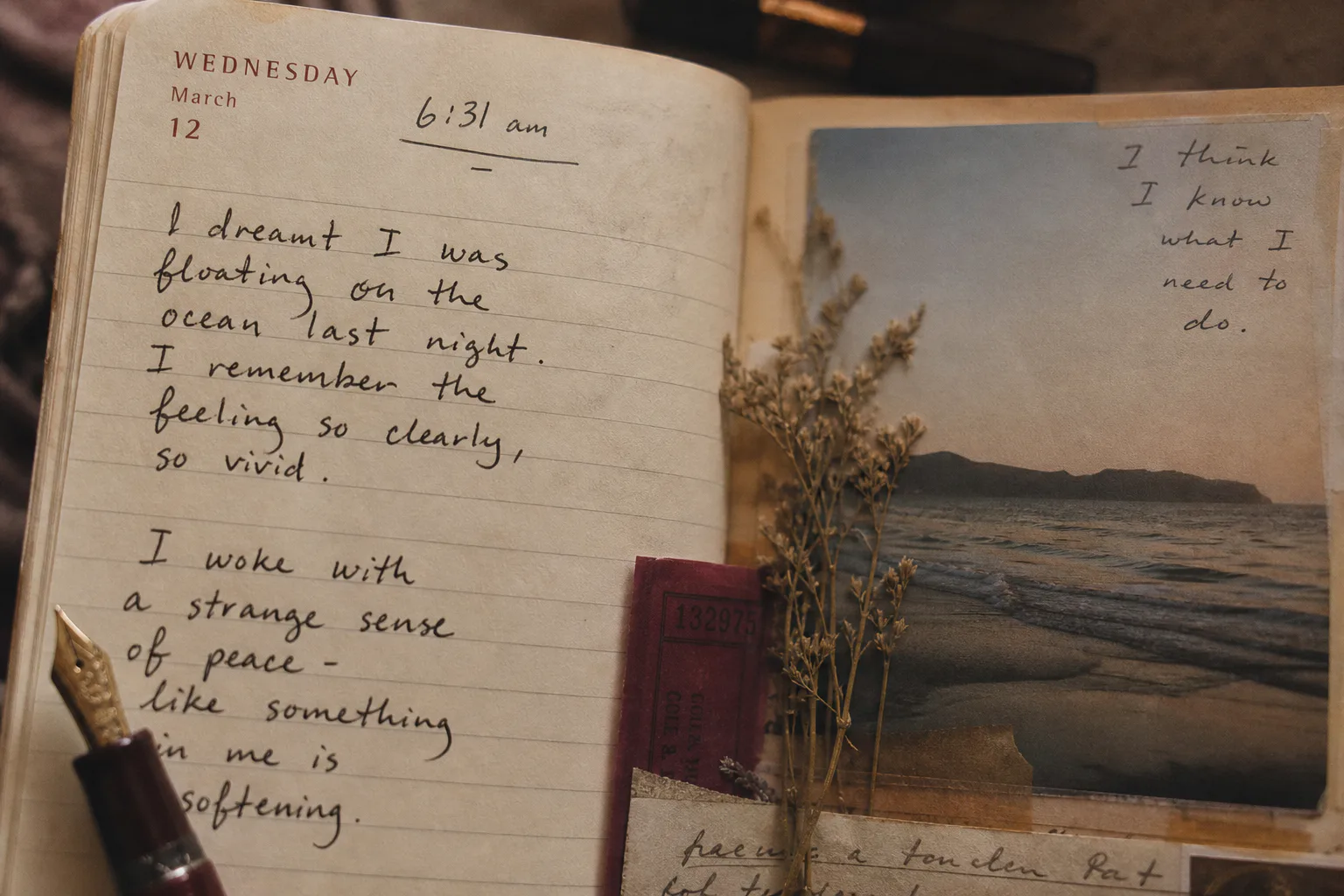
Your shoes are by the door. A walking manifestation meditation is a short, intentional walk where you listen to future-self audio and let your body rehearse the life you intend. You do not have to force belief. You walk, listen, return, and let repetition make the new self feel more familiar.
What is a walking manifestation meditation?
A walking manifestation meditation is manifestation practice carried by the rhythm of your steps.
It is not a performance. It is not a prettier walk. It is a way to let the mind hear a future-self story while the body is already in motion. That matters. The Centers for Disease Control and Prevention recommends 150 minutes of moderate aerobic activity per week for adults, and walking is one of the most accessible ways to reach that number. When your manifestation practice attaches itself to something the body already knows, it has less to prove.
The audio gives the walk its shape. Here is the AYA Method in its simplest form: The AYA Method is a daily audio manifestation practice. Each day you listen to a short personalized recording — your Dream-Self Moment — narrated from the version of you who has already manifested the life you intend. Listening is the practice. Repetition is the work. The audio is the method.
That last sentence is the whole room. The audio is not decoration. It is not background sound for a mood. It is the practice itself. The walk supports it, the same way a quiet room supports reading. A daily affirmation can help you remember one sentence. A Manifestation Board can help you see one image. But the walking manifestation meditation lives in listening.
A 2014 Stanford study by Oppezzo and Schwartz found that walking increased creative output by about 60% compared with sitting. That does not mean every walk becomes revelation. It means movement can loosen the grip of fixed thought. Your future-self audio enters there, into a mind that is moving without being rushed.
A true practice is not loud. It is repeatable.
If you are new to manifestation, keep the frame plain: you are practicing identity, attention, and memory. You are letting the nervous system meet a version of you before the outer life has fully caught up.
Why add future-self audio to a walk?
Future-self audio gives the walk a voice to follow when your attention would otherwise scatter.
Most people already know how to walk. Fewer people know how to hold a new self-concept without arguing with it. Audio helps because it moves forward for you. When the mind says, not yet, the recording keeps speaking. When you start planning dinner, the next line brings you back. In a 2010 Science study, Killingsworth and Gilbert found that people’s minds wandered 46.9% of the time in daily life samples. Wandering is ordinary. A good practice builds a path back.
Future-self audio also gives manifestation a sensory container. You hear tone, pacing, detail, and sequence. This is different from silently repeating a phrase. Affirmations can be useful, especially when they are simple enough to remember under stress. But a Dream-Self Moment can hold a full scene: how you wake, what you choose, who you no longer chase, what feels normal now.
Joe Dispenza often speaks about rehearsing a future until the body begins to recognize it as familiar. You do not have to take every claim literally to see the practical point. Repetition changes expectation. In behavioral science, mental rehearsal is widely used in sport and performance settings; athletes often pair imagery with physical rhythm because it helps the brain practice sequence before the moment arrives.
The walk adds one more layer. Each step says, I can move as this self. Not later. Not only when the room is perfect. Here, between the mailbox and the corner store. Identity becomes less abstract when your feet are involved.
| Practice piece | What it does | Keep it simple |
|---|---|---|
| Future-self audio | Gives the walk a narrated identity rehearsal | Listen once, without multitasking |
| Walking pace | Keeps the body alert but calm | Slower than an errand pace |
| Breath | Marks the return to now | One easy breath per few steps |
| Closing action | Turns listening into behavior | One small choice after the walk |
Your mind believes what it meets often enough to stop treating it as foreign.
How do you prepare before you walk?
Prepare by removing decisions before the audio begins.
Choose the route first. It should be familiar, safe, and boring enough that you do not need navigation. Eight to 12 minutes is enough. The American Heart Association often points to short walks as meaningful movement when they are repeated across a week, and that is the spirit here. You are not trying to earn your future. You are making a small container you can return to.
Use headphones that let you hear your surroundings. Keep the volume low. If you are walking outside, safety is part of the practice, not an interruption. A future self who ignores traffic is not the one you are building. If your route has crossings, pause the audio or let the words pass without trying to hold them. You can return after the curb.
Before you press play, name one reason for the walk in plain language. Not a grand wish. One true sentence. I am practicing calm leadership. I am learning to be loved without bargaining. I am becoming someone who finishes. Research on implementation intentions by Peter Gollwitzer, first developed in the 1990s, suggests that specific if-then plans help people follow through. You can use that here: If I reach the corner, then I soften my jaw and listen again.
A simple setup may look like this:
- Put on shoes.
- Choose the same route as yesterday.
- Set phone to Do Not Disturb if it is safe.
- Start the Dream-Self Moment.
- Walk slower than your usual pace.
- End by choosing one small action.
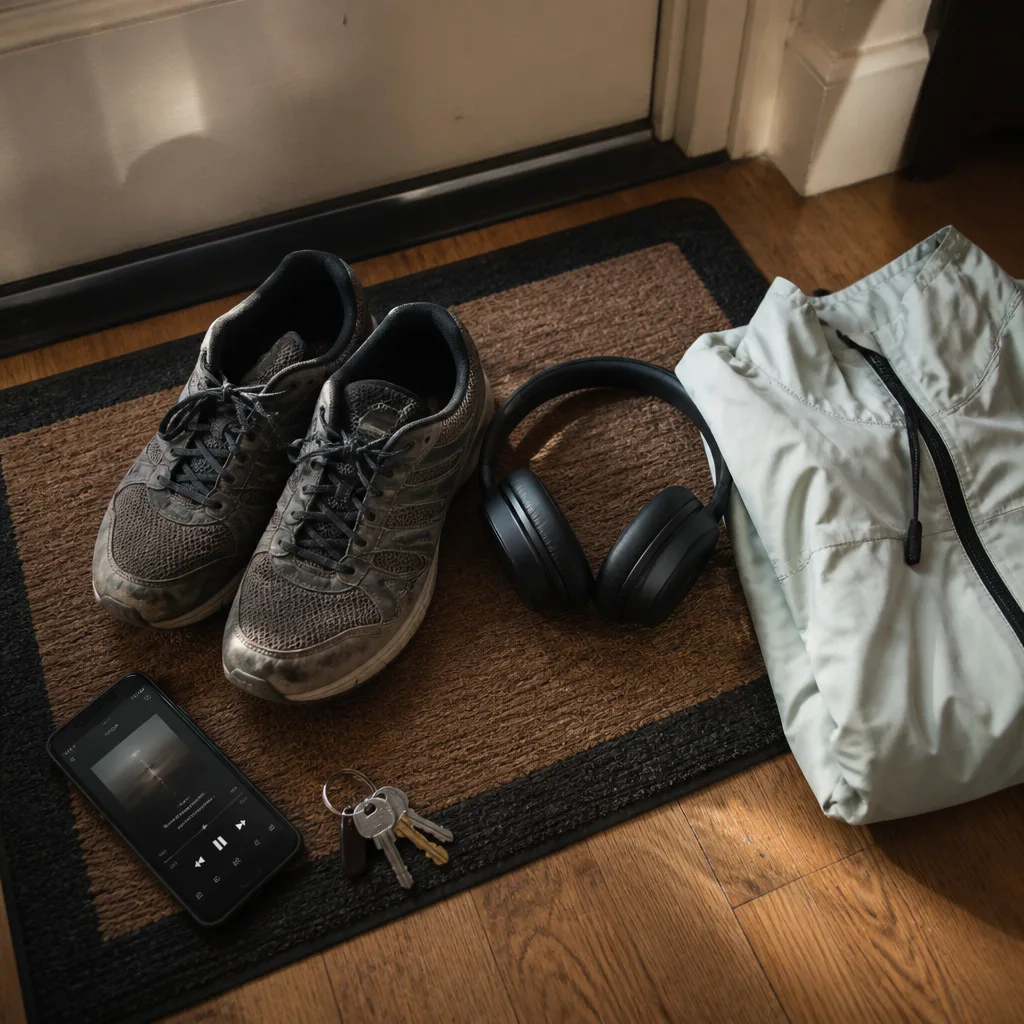
Do not overbuild the ritual. The more conditions a practice requires, the more fragile it becomes. James Clear popularized the idea that habits become easier when the cue is obvious and the action is small; the same holds here. Shoes by the door. Audio ready. Same route. Less friction.
How do you listen while your body moves?
Listen by letting the audio lead and letting the body answer in small ways.
Start walking before you start analyzing. For the first minute, let your attention rest on three things: feet, breath, voice. The order matters less than the return. If a line says you are steady in a room that used to scare you, notice whether your shoulders believe it. If the body tightens, that is information. It is not failure.
Dr. Andrew Huberman has often discussed the link between optic flow, forward movement, and the nervous system’s threat response. The research base is broader than one person, but the practical note is simple: when you move forward through space, the brain receives a stream of visual motion that may help reduce certain forms of anxious arousal. Walking while listening can make difficult future-self language feel less confrontational than hearing it while sitting still.
Use a soft labeling system. When something lands, name it once. Warmth. Doubt. Grief. Yes. Then keep walking. A 2018 review in affect labeling research notes that naming emotions can reduce amygdala activity in some lab settings. You do not need to turn the walk into therapy. You are just giving the body a word, then giving it the next step.
Try this during the middle of the audio:
- When the voice names a future you want, look at one real object near you.
- When resistance appears, loosen one place in the body by 5%.
- When your mind wanders, return to the sound of the next word.
- When a sentence feels true, let your pace stay steady instead of speeding up.
The point is not to feel certain. The point is to stay close enough to hear.
Neville Goddard wrote often about assuming the feeling of the wish fulfilled. On a walk, that assumption becomes modest. It is not theatrical. It is the way your hand rests by your side. It is the way you stop checking who has approved of you.
What do you do when your mind wanders or emotion rises?
You return without making the wandering mean anything about you.
The mind will leave. It will count tasks, replay conversations, check for proof, and ask whether this is working. That is normal. In the same 2010 Science paper, people were less happy when their minds wandered, even if the topic was neutral. A walking manifestation meditation does not demand perfect attention. It trains the return.
Use a three-part reset when you notice you are gone:
- Feel one foot meet the ground.
- Take one unforced breath.
- Rejoin the next sentence of the audio.
That is enough. Do not rewind unless you missed most of the recording. Rewinding can become another way to chase a perfect session. Your future self does not need a flawless listener. Your future self needs someone who comes back.
If emotion rises, slow down. If tears come, let the walk become smaller. You can pause near a tree, a wall, a parked car, anything steady. Trauma-sensitive mindfulness teachers often remind practitioners to orient to the present room or place when inner material feels too much. Outside, that can mean naming five ordinary things: pavement, window, leaf, shoe, sky.
There is a quiet difference between being moved and being flooded. Being moved may feel tender, open, sad, or relieved. Being flooded may feel like you cannot stay with yourself. If you feel flooded, stop the audio. Look around. Text someone if you need to. The method is not a test of endurance.
You do not become your future self by abandoning the self who is here.
This is why walking can be kind. It gives emotion somewhere to go. Not away. Through the feet, into the breath, back into now.
How do you close the practice after the audio ends?
Close by choosing one small action that belongs to the self you just heard.
Do not let the walk end in a vague glow. Give it one behavioral anchor. If your audio described you as rested, your action might be closing one tab before bed. If it described you as financially honest, your action might be opening the banking app for 2 minutes. If it described you as loved, your action might be not sending the anxious follow-up text.
BJ Fogg’s behavior model, developed at Stanford, describes behavior as the meeting of motivation, ability, and prompt. After a walking manifestation meditation, motivation may be slightly higher, but ability still matters. Choose an action so small it can survive a normal day. One email. One glass of water. One boundary sentence. One saved dollar.
This is also where the app complements can help. A daily affirmation can hold the sentence you want to remember after the walk. A Manifestation Board can hold the image you want to see later. They are not the pillars of the method. They are small supports around the audio. If you are curious about timing your practice with personal cycles, astrology and manifestation can be a reflective layer, not a rulebook.
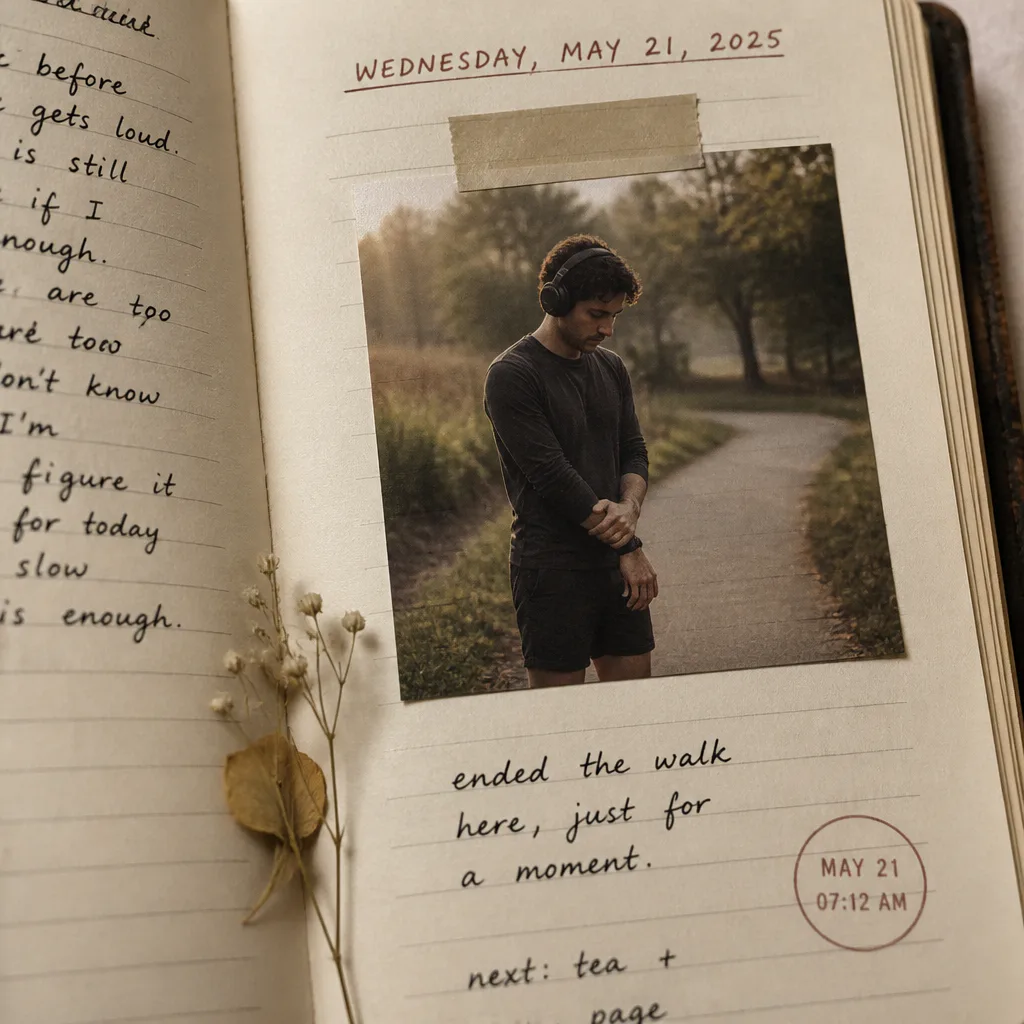
Use this closing sequence:
- Stop walking for 10 seconds when the audio ends.
- Put one hand somewhere neutral, like your wrist or jacket pocket.
- Ask, What is the smallest honest action now?
- Do it within the next hour if possible.
- Mark the walk complete, without grading it.
A 2009 study by Lally and colleagues found habit formation took 66 days on average, with a wide range from 18 to 254 days. That range is comforting. Some identities take longer to feel ordinary. You are allowed to be a slow learner of your own becoming.
The future becomes more believable when it leaves evidence in the day.
How often should you do a walking manifestation meditation?
Do it daily if you can, but make the minimum so small that missing a perfect walk does not end the practice.
The AYA Method is daily because repetition matters. Not because you are being watched. Not because one missed day ruins anything. Daily listening gives the brain repeated contact with the same self-story. In memory research, spaced repetition consistently helps retention more than one intense session. Your future-self audio works best when it becomes familiar enough to meet you before old patterns take the wheel.
If daily walking is not realistic, keep daily listening and walk when you can. The audio is the method. You can listen seated, standing by the kettle, or lying still before sleep. The walk is an amplifier. It adds movement, breath, and place. But it is not required for the method to count.
For a gentle weekly rhythm, try this:
| Day type | Practice | Time |
|---|---|---|
| Full day | Walk with future-self audio | 8 to 12 minutes |
| Busy day | Listen while standing still | 3 to 5 minutes |
| Low day | Press play and breathe | 1 recording |
| Reset day | Walk without adding goals | 10 minutes |
The National Health Service in the UK notes that even a brisk 10-minute daily walk can count toward weekly activity. Keep that in mind when the mind says small does not matter. Small is often the only form a real practice can take.
If you track things, track gently. Pris would make a checkbox, not a court case. Date. Listened. Walked. One word after. That is enough data to see patterns without turning your inner life into a dashboard.
For more context on how audio fits inside a broader practice, return to the manifestation pillar when you want the wider map, and to the affirmations pillar when one sentence is all you can carry.
What mistakes make the practice harder than it needs to be?
The main mistake is trying to make a soft practice prove itself too quickly.
One common mistake is walking too fast. If the walk becomes exercise first, the audio may become noise. There is nothing wrong with exercise. The CDC’s 150-minute weekly guideline is worth honoring. But for walking manifestation meditation, choose a pace that lets you hear and feel. You should be able to notice a sentence before the next one arrives.
Another mistake is using audio that is too vague. A future self needs texture. Not ten perfect outcomes. A few true details. How you speak. What you no longer tolerate. What your mornings feel like. What you do when fear appears. The more specific the narration, the easier it is for the body to rehearse.
A third mistake is demanding belief. Belief often comes late. At first, your job is contact. Listen today. Listen tomorrow. Let the words become less strange. In small studies of mental imagery, vividness and repetition tend to matter, but not everyone visualizes easily. Audio can help people who do not see clear inner pictures. You can hear your way in.
Avoid these quiet practice-breakers:
- Checking messages during the recording.
- Choosing a route with too many decisions.
- Rewriting your whole life after one good walk.
- Treating doubt as disobedience.
- Forgetting the small action after the audio ends.
If you want one rule, keep this one: protect the listening. Everything else can be adjusted.
The sidewalk is still there. Begin with the next step.