frequencies binaural
432 Hz vs 528 Hz Under Dream-Self Audio
A quiet comparison of 432 Hz vs 528 Hz under Dream-Self audio, with habit science, listening safety, and what actually matters daily.
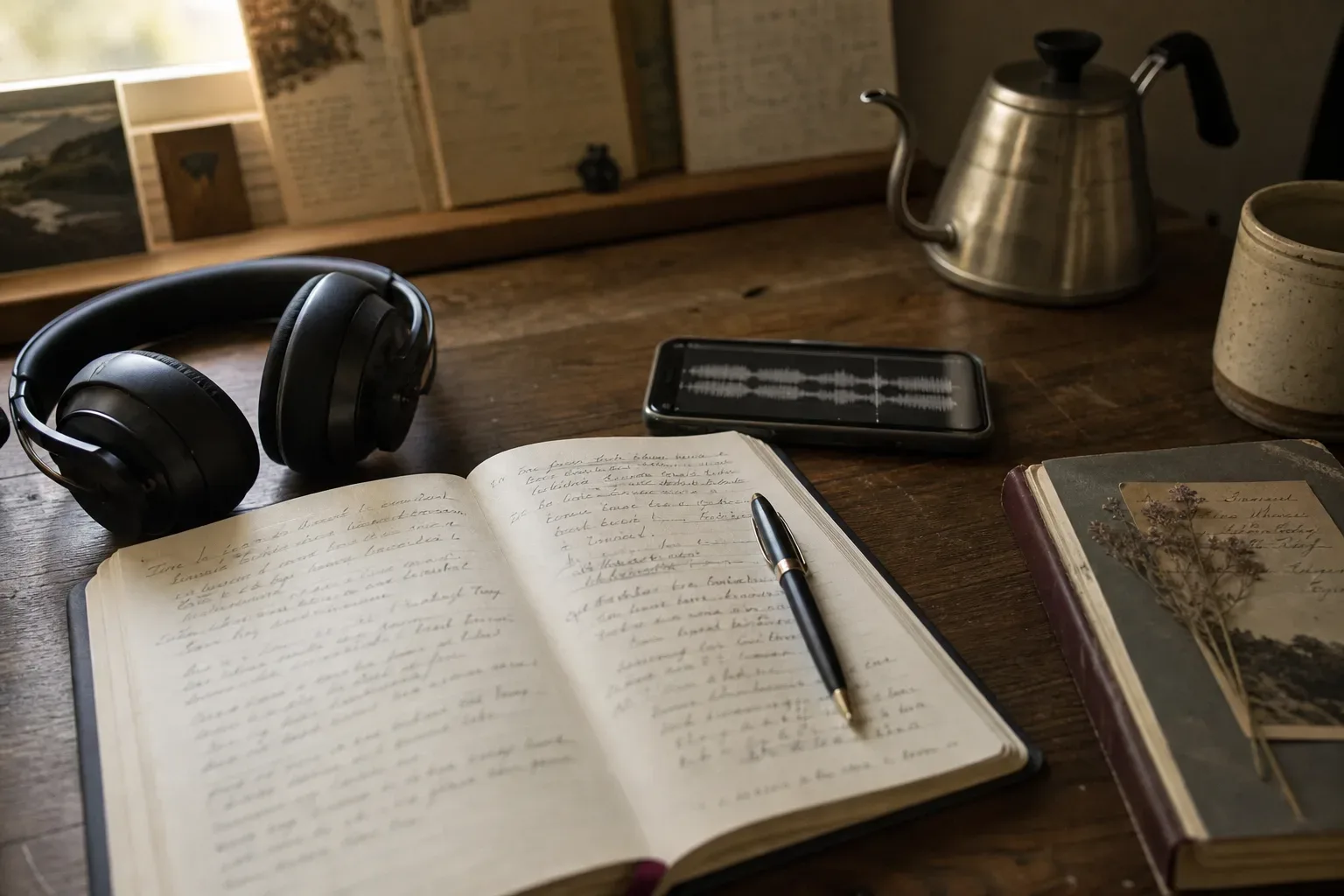
October 5th. The kettle clicked off while I tested 432 Hz vs 528 Hz under my Dream-Self audio. My answer is plain: use the frequency that makes the voice easier to return to tomorrow. Neither tone is magic. The spoken identity rehearsal matters more than the number beneath it.
Which frequency should I put under my Dream-Self audio?
Use 432 Hz if you want softness, and 528 Hz if you want a brighter lift, but choose by repeatability rather than mythology.
I listened to both this morning in the kitchen, the blue mug near my left hand, the same chair as yesterday. The 432 Hz version sat behind the words like a low lamp. The 528 Hz version felt a little more forward, not unpleasant, just more noticeable. After 6 minutes, I wrote the same sentence twice in my notebook: if I notice the background more than the message, it is too much background.
Here is the part I keep returning to as someone who built habit tools for about 14,000 users: the winning design is usually the one people do again on an ordinary Tuesday. In behavior research, Lally and colleagues, writing in the European Journal of Social Psychology in 2009, found habit formation ranged from 18 to 254 days, with an average near 66 days. A tone that feels impressive on day 1 but irritating on day 12 is bad engineering.
The the AYA Method is a daily audio manifestation practice. Each day you listen to a short personalized recording, your Dream-Self Moment, narrated from the version of you who has already manifested the life you intend. Listening is the practice. Repetition is the work. The audio is the method. The frequency under it should serve that, not take the stage.
I keep this small comparison on the page before I make any edit:
| Choice | What I notice | Best use | Watch for |
|---|---|---|---|
| 432 Hz | Softer, rounder, less bright | Morning, sleep, anxious days | Can feel too sleepy |
| 528 Hz | Brighter, clearer, more present | Midday reset, walking, cleaning | Can pull focus from the voice |
| No tone | Most literal and clean | First draft, testing words | May feel too bare |
A frequency is furniture. The voice is the room.
What is the real difference between 432 Hz and 528 Hz?
The real difference is pitch reference and listening feel, not a proven difference in destiny.
Most modern Western music uses A4 = 440 Hz as its tuning reference, a standard formalized in ISO 16. When people talk about 432 Hz, they often mean retuning music so the A above middle C sits at 432 cycles per second instead of 440. That is a difference of 8 Hz at that note, and all other notes move in relation to it. It is audible to many people, but it is not a separate law of nature.
528 Hz is usually discussed differently. It is often singled out as one tone inside what internet culture calls the Solfeggio frequencies. The claims around it are large. The evidence is not. I have seen 528 Hz called repair, love, or miracle frequency. Those words make me suspicious because they ask the nervous system to believe a slogan before it has had breakfast.
There are small studies. A 2018 paper in Health reported reduced stress markers after listening to 528 Hz music, but the research base is limited and not enough to treat the frequency as a reliable intervention. A small 2020 study on 432 Hz music and sleep-related relaxation has been cited often online, yet small samples cannot carry the weight people put on them. Small signals are not the same as solid instructions.
For a Dream-Self recording, I care about 3 practical differences:
- Voice clarity: Can I hear every word without leaning in?
- Emotional temperature: Does the bed make the recording feel calm, alert, or sentimental?
- Return rate: Would I listen again tomorrow without bargaining?
This is where manifestation becomes less theatrical and more behavioral. Naming a future self is not the hard part. Returning to that identity cue 30 mornings in a row is the hard part. The carrier frequency should make return easier.
The best background tone is the one that disappears at the exact moment the sentence finds you.
Does science prove that one frequency works better?
No, science does not currently prove that 432 Hz or 528 Hz works better for manifestation audio.
I do not say that to flatten the mystery out of listening. I say it because overstating evidence ruins good practice. Music affects mood, arousal, and attention. That part is well supported. A 2013 review in Trends in Cognitive Sciences by Chanda and Levitin described music’s relationship with reward, stress, immunity, and social connection. But that is not the same as proving that one specific frequency changes your future.
The strongest evidence I trust for this practice sits closer to identity and rehearsal than frequency. Self-affirmation research, including work by Claude Steele from 1988 onward, suggests that reflecting on valued identity can reduce defensiveness under threat. Implementation intention research by Peter Gollwitzer, including a 1999 review covering 94 studies, found that if-then planning improves follow-through. These are not mystical claims. They are repeatable behavioral levers.
I have also learned to separate a soothing listening condition from a causal claim. Dr. Andrew Huberman has spoken often about non-sleep deep rest protocols of around 10 to 20 minutes for downshifting the body. That does not mean every low tone heals something. It means conditions that reduce friction can help a person repeat a practice.
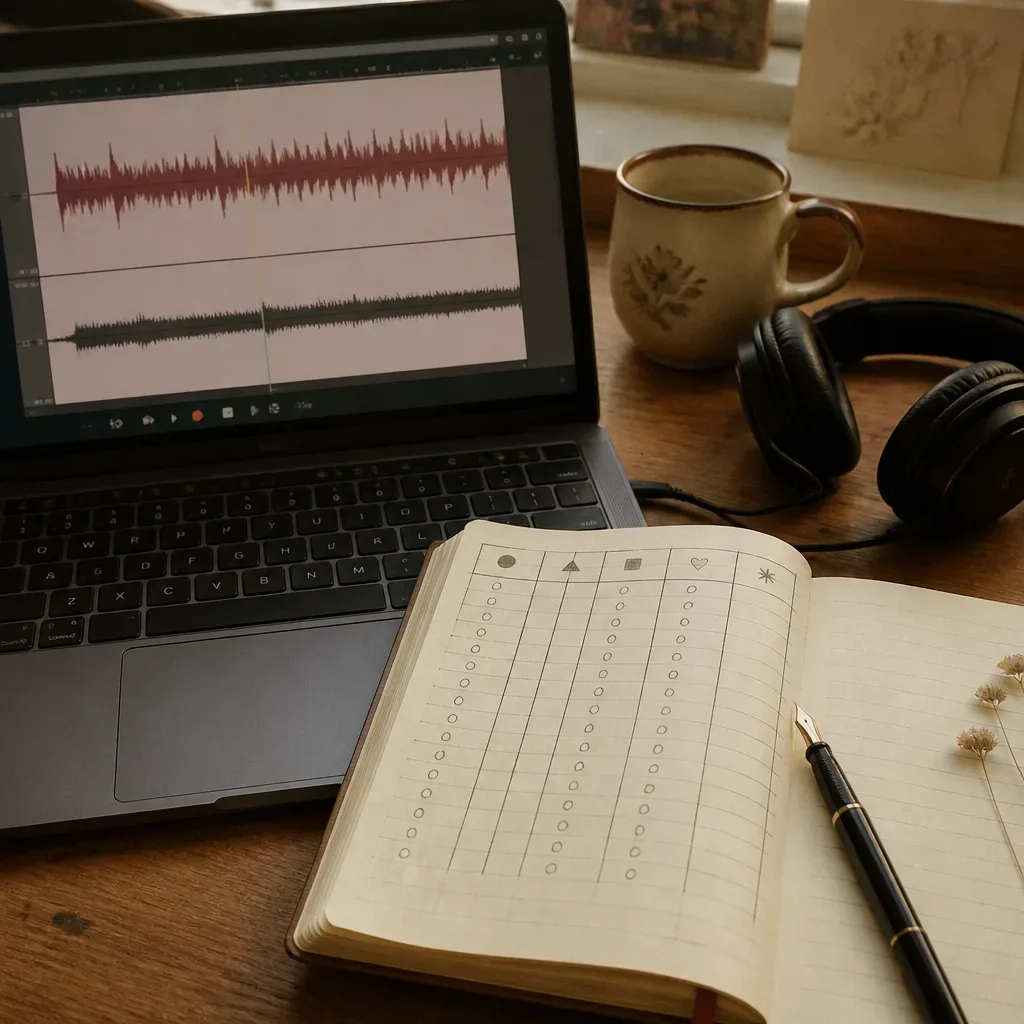
When I test Dream-Self audio, I run it like a product change, not like a ceremony. Same voice. Same script. Same 5-minute length. Same headphones. Different bed underneath. Then I ask what changed after 7 days, not after 7 seconds. My habit app data taught me this: novelty is loud, retention is quiet.
I wrote a small checklist on the page:
- Did I finish the recording?
- Did I feel pulled toward or away from tomorrow’s listen?
- Did the tone support the words or decorate them?
- Did I remember one sentence afterward?
- Did my body feel settled within 2 minutes?
If I cannot answer yes to at least 4 of those, the frequency is not earning its place.
How should the frequency sit under the spoken voice?
The frequency should sit low enough that the words remain primary and the body does not brace against the sound.
This is the mixing rule I use: the Dream-Self voice should feel like someone speaking from the chair beside me, while the tone should feel like the room tone I only notice when it stops. In audio terms, that usually means lowering the bed several decibels beneath the narration. The exact number depends on the voice, microphone, headphones, and room, but I often start with the backing layer around 12 to 18 dB quieter than the spoken track.
The World Health Organization has warned that unsafe listening through personal audio devices can contribute to hearing risk, especially at high volumes over time. A common occupational reference point is 85 dB across 8 hours, though personal listening is different and should be gentler. For morning manifestation audio, there is no prize for loudness. Loud is not committed. Loud is just loud.
I test the mix in 3 places: my desk headphones, the small speaker in the kitchen, and one cheap pair of wired earbuds I keep because they tell the truth. If the 528 Hz layer feels pleasant in studio headphones but sharp in cheap earbuds, I lower it. If 432 Hz disappears completely on a speaker, I may raise it a little or remove it. Removing is allowed. Simplicity is allowed.
There is also a language issue. If your recording uses affirming sentences, make the consonants clear. The affirmations side of the practice depends on comprehension. A beautiful bed that masks the line is like writing a note to yourself and folding it before the ink dries.
I keep one rule taped, figuratively, to every audio file: never let atmosphere steal the instruction.
When would I choose 432 Hz?
I choose 432 Hz when I need the audio to feel steady, private, and easy to hear before the day starts.
This week, 432 Hz worked best while the kettle warmed and the apartment was still dark. I used it under a 4-minute Dream-Self Moment, the one where the future voice speaks plainly about finishing the work before checking messages. The tone did not ask me to have an opinion about it. That mattered. On low-sleep mornings, I have less patience for anything shiny.
People often describe 432 Hz as warmer than 440 Hz tuning. That is subjective, but subjective does not mean useless. In product design, perceived comfort changes use. A 1-step reduction in friction can decide whether a habit survives travel, illness, or a busy week. In my old app data, streak breaks clustered around disruptions: weekends, flights, family visits, and schedule changes. The practice that survives disruption is usually the least dramatic one.
I would choose 432 Hz for:
- early morning listening
- pre-sleep listening
- anxious or overstimulated days
- scripts with tender language
- listeners who dislike bright tones
A small caution belongs here. If 432 Hz makes the recording too sleepy, it may blur the intention. Some people need alertness, not softness. The Manifestation pillar on this site makes a useful distinction between naming a desire and practicing the identity that can hold it. If the audio becomes a lullaby every time, the identity rehearsal may lose its edge.
I want calm, not fog. Those are different rooms.
When would I choose 528 Hz?
I choose 528 Hz when I want the audio to feel clear, awake, and a little more forward without becoming distracting.
The 528 Hz version made sense for me at 2:40 p.m., not at dawn. I played it after lunch, when my attention had started to scatter into tabs. The brighter tone gave the recording a clean outline. I could still hear the line I needed: I finish the small unit before I negotiate with my mood. That sentence did more work than the frequency did.
The claims around 528 Hz are often too certain. I am careful there. Some listeners love it and report a clearer mood. Some feel nothing. Some find it piercing. Human hearing also changes with age and exposure; the National Institute on Deafness and Other Communication Disorders notes that long or repeated exposure to sounds at or above 85 dBA can contribute to hearing loss. Even a pleasant tone should be kept modest.
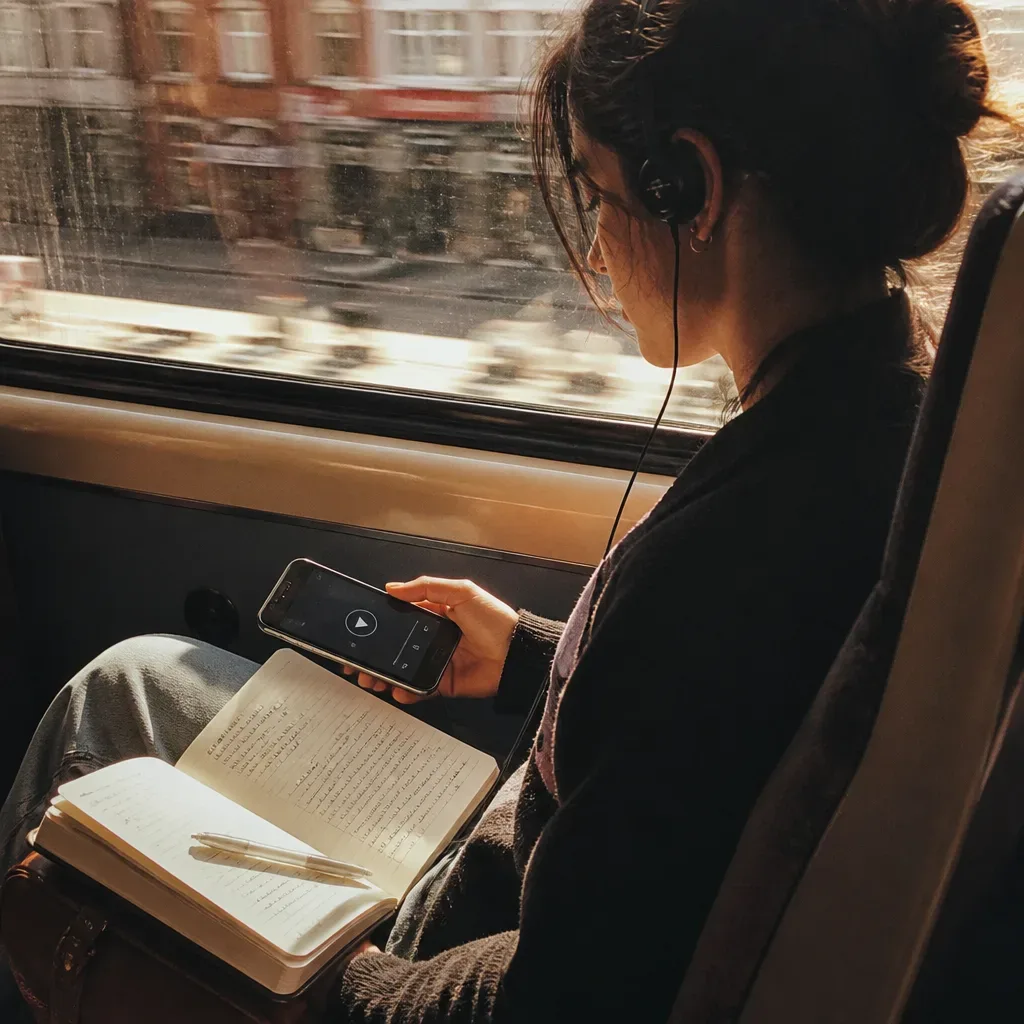
I would choose 528 Hz for a Dream-Self audio file when the script is practical and action-facing. For example, a recording about sending the proposal, cleaning the desk, making the call, or returning to training. The brightness can support an active posture. It is less ideal, for me, with grief, sleep, or tender self-repair language.
This is also where timing traditions may matter to some readers. If you already plan listening around moon phases or personal transits, the astrology and manifestation guide may give you a softer structure. I do not build my daily practice around it, but I understand why a dated ritual helps some people remember. Remembering is not a small thing. In habit science, cues do half the labor.
Use 528 Hz when it helps you sit up. Stop using it when it starts performing at you.
What actually matters more than 432 Hz vs 528 Hz?
The repeatable listening system matters more than the frequency under the recording.
I know this is less glamorous. It is also kinder. A daily audio practice does not need a perfect tone. It needs a reliable cue, a short duration, a clear script, and a place in the day where it can attach to something already happening. BJ Fogg’s behavior model describes behavior as a meeting point between motivation, ability, and prompt. When the prompt is the kettle, the toothbrush, or the train door closing, the practice has somewhere to land.
Here is the system I use now:
- I listen after turning on the kettle, before opening messages.
- I keep the audio under 6 minutes.
- I choose one frequency bed for 7 days before changing it.
- I write one remembered sentence in the notebook.
- I do not edit the file when I am tired.
The 7-day rule saves me from mood-based tinkering. One listen is taste. Seven listens is data. In my app work, people often requested more controls, more colors, more reminders. But the quiet retention gains usually came from fewer decisions at the moment of use. Decision load is expensive. A practice should not invoice you before breakfast.
The Princeton Engineering Anomalies Research program and later Global Consciousness Project are sometimes mentioned in manifestation spaces because they studied intention, attention, and random systems over many years. Those projects remain debated and are not proof that a frequency will create an outcome. I mention them only because they taught me caution: strange findings need careful containers. Daily practice needs even more careful containers.
So my comparison ends here, at the kitchen table. If 432 Hz helps you listen gently, use it. If 528 Hz helps you listen clearly, use it. If silence under the voice works best, keep silence. The audio is not weaker without decoration. The practice is the return.
Before I forget, this is the sentence I kept from today: the method is not the sound underneath, it is the self I am willing to hear again.
Wednesday now. The headphones are back by the cup.