subliminals
Subliminal Results: Try Audible Dream-Self Audio First
Subliminal results are easier to read when you test audible Dream-Self audio first. Learn what to track, what science says, and when to use subliminals.
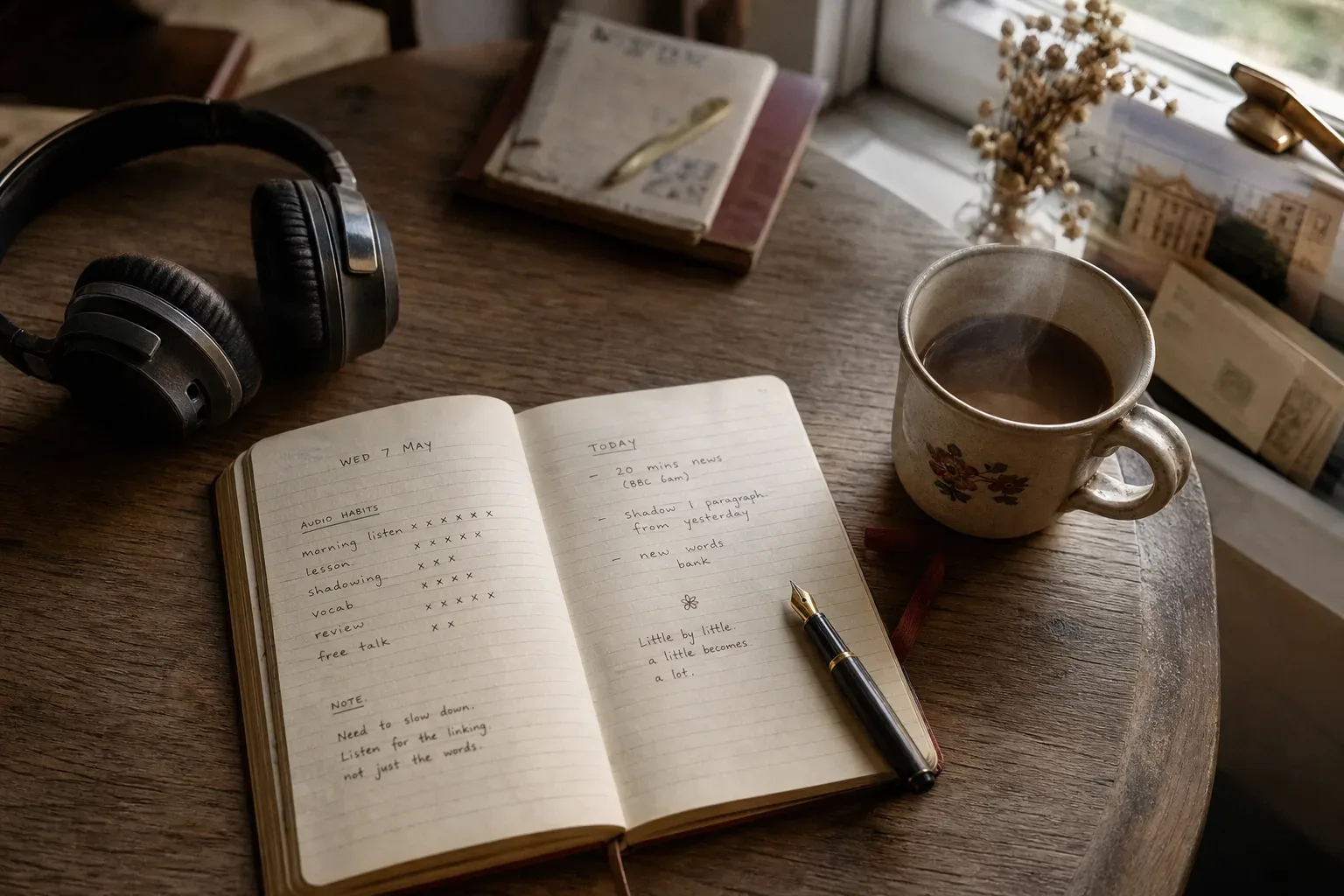
Friday. The kettle clicked off at 6:42, and I wrote this before opening Slack: subliminal results are easier to judge when I test audible Dream-Self audio first, because I can hear the message, remember it, and track whether it changes what I do. Hidden audio can wait until the baseline is clear.
What are subliminal results, really?
Subliminal results are claimed changes that follow messages a person cannot consciously hear or notice.
I write that carefully because the phrase gets used for everything from calmer mornings to a new face shape to money appearing by next week. In my notebook, I keep it narrower. A result has to be observable in some way. Did I apply for 3 roles. Did I stop rereading one old text at midnight. Did I speak to myself less harshly after the meeting. If the change cannot be named, I cannot track it kindly.
The research history makes me cautious. In 1991, Anthony Greenwald, Eric Spangenberg, Anthony Pratkanis, and Jay Eskenazi published a study in Psychological Science on self-help subliminal tapes. The tapes did not improve memory or self-esteem as advertised, but the labels influenced what participants believed had improved. That detail sits with me. Expectancy can make a person feel sure, even when the measured change is not there.
I do not think that makes subliminals useless. It makes them hard to read. The mind can process some stimuli without full conscious awareness. Cognitive neuroscience reviews, including work by Kouider and Dehaene in 2007, discuss unconscious processing in controlled tasks. But a laboratory signal is not the same as a 10-hour video promising a different life by Sunday. A quiet cue is not a contract.
When I compare this topic with the wider Manifestation pillar, I keep returning to one plain sentence: A practice is not stronger because it is hidden. Sometimes hidden things are just harder to audit. My engineer brain, annoying but occasionally useful, wants logs before lore.
Why do I try audible Dream-Self audio before silent tracks?
I try audible Dream-Self audio first because it gives me a message I can consent to, repeat, and measure.
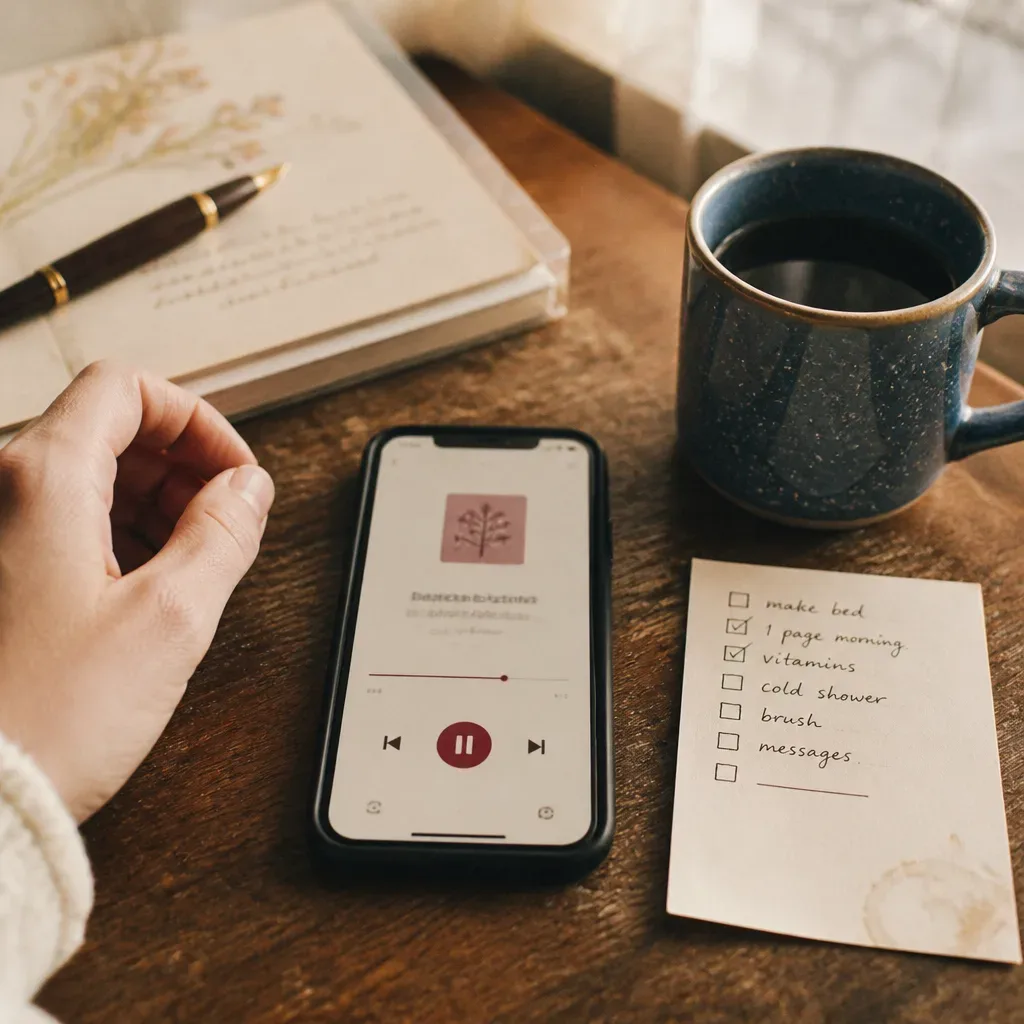
The practice I return to is the AYA Method. The AYA Method is a daily audio manifestation practice. Each day you listen to a short personalized recording, your Dream-Self Moment, narrated from the version of you who has already manifested the life you intend. Listening is the practice. Repetition is the work. The audio is the method. I listened this morning before brushing my teeth. That is the order I do them in, because if I brush first I somehow start answering messages.
Audible audio has one simple advantage: I know what I heard. If the recording says, I answer with steadiness, I can notice at 2:15 p.m. whether I answered the bug report with steadiness or with the thin little panic voice I dislike. Silent subliminals remove that checkpoint. I might still be influenced, but I cannot verify the content in the moment. In healthcare software, we would never accept an intervention whose label we refused to read.
There is also a nervous system reason. Dr. Andrew Huberman has often described the value of repeated auditory protocols for state change, especially when paired with breathing or rest. I do not need a grand claim there. A 10-minute listen at the same hour is already a cue. The body learns timing. Habit researchers Wendy Wood and David Neal have written that stable contexts strengthen automaticity. My blue mug has become part of the protocol, which is funny and also data.
Here is the rule I kept on the page this week:
If I cannot hear the promise, I cannot know whether I agreed to practice it.
That matters more than it sounds. Consent is not unspiritual. Consent is the door.
What does research say about hidden messages and attention?
Research says subliminal perception exists in limited conditions, but self-help claims need more proof than they usually provide.
This is where I have to separate two things that often get tangled. First, yes, people can respond to stimuli they do not consciously report seeing or hearing. Priming studies have shown small effects in carefully timed tasks, often measured in milliseconds. Second, that does not mean a masked sentence under rain sounds will reliably change my self-concept, income, or relationship patterns. A millisecond effect is not the same as a life decision.
The 1991 Greenwald study is still useful because it tested commercial-style claims. Participants used tapes labeled for either memory or self-esteem. The actual tape content and the label were crossed, so some people thought they were using one kind when they were using the other. The perceived improvement followed the label more than the content. That is not embarrassing. It is human. The label became an audible belief, even when the audio was meant to be hidden.
I thought about that while reading the Affirmations pillar. In 2009, Joanne Wood, W. Q. Elaine Perunovic, and John Lee published a Psychological Science paper showing that very positive self-statements could make people with low self-esteem feel worse. The sentence matters. The listener matters. Timing matters. A statement that lands as false can create resistance instead of care.
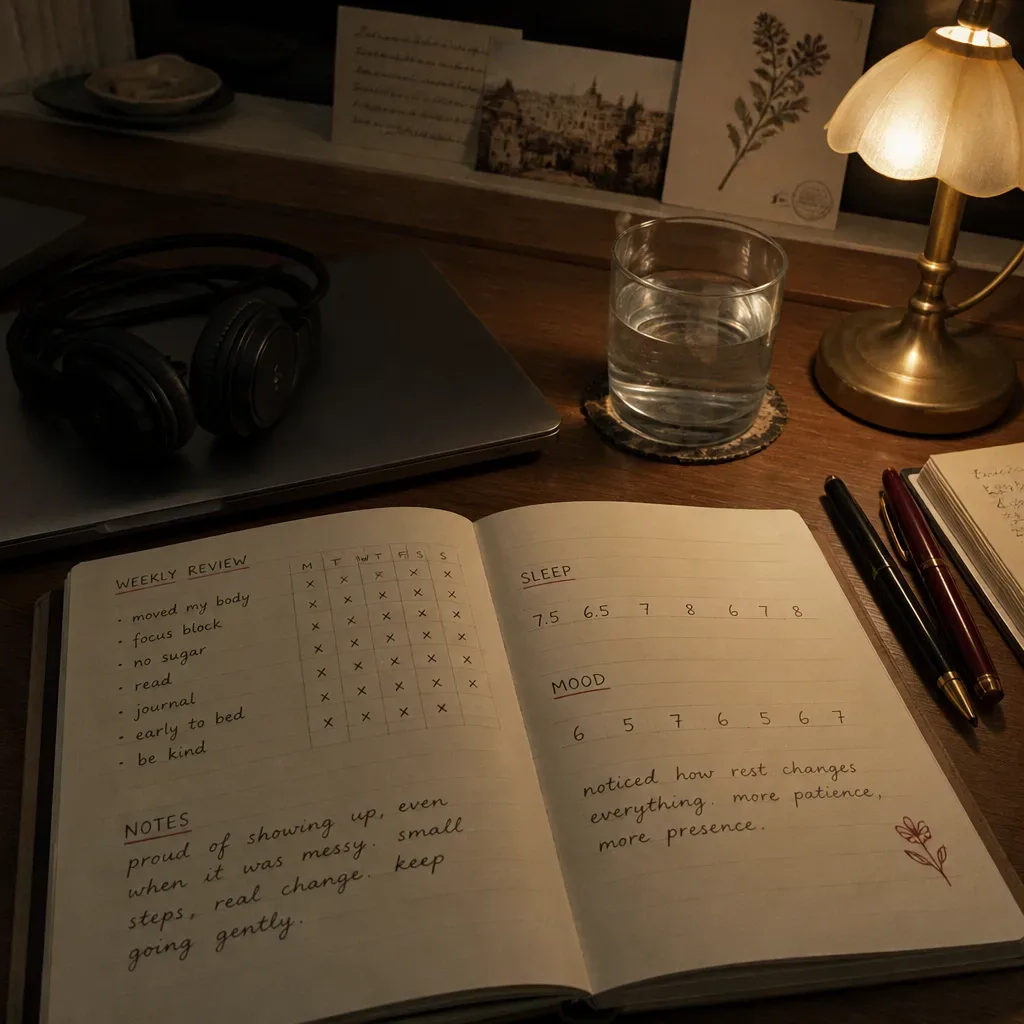
So I do not use research as a weapon against hope. I use it as a lamp. Data does not cancel mystery; it keeps me from bullying myself with it. When I test subliminal results, I write down sleep, mood, and the actual behavior I am hoping to see. If I slept 4 hours after a late deploy, no audio gets full blame for the next day.
A small table helps me keep the claims separate:
| Claim I hear | What I can actually test | Minimum note I keep |
|---|---|---|
| I feel more confident | Number of avoided tasks completed | Count per day for 7 days |
| I attract better work | Applications, emails, follow-ups | Date and action taken |
| I feel calmer | Mood rating and recovery time | 1 to 5 score after stress |
| My self-talk changed | Harsh phrases noticed and repaired | One sentence before bed |
The table is not romantic. It is useful. A result I cannot name becomes a story I can bend in any direction.
How can I test subliminal results without fooling myself?
I test subliminal results by setting a baseline first, changing one thing at a time, and tracking behavior instead of mood alone.
I started doing this because my memory edits for drama. If Wednesday felt awful, I assume the whole week failed. Then I open the notes and see that I listened 5 of 7 mornings, sent 2 difficult emails, slept under 6 hours twice, and cried once because the build broke during lunch. That is not failure. That is a mixed dataset with a person inside it.
For a first test, I use 7 days. For anything I might believe, I use 30. Habit research by Phillippa Lally and colleagues in 2009 found that automaticity took an average of 66 days in their sample, with wide variation from 18 to 254 days. That number keeps me humble. If a simple habit can need that much variation, I should be careful about declaring a hidden audio track successful after 2 listens.
My current test looks like this:
- I write one observable aim in the morning, no more than 12 words.
- I listen to audible Dream-Self audio first, before any subliminal track.
- I mark whether I remembered the sentence during the day.
- I track one behavior, not 9 feelings.
- I review on day 7 and again on day 30.
The most useful measure is boring: did I act differently. Not perfectly. Differently. If I am asking for steadier work, I count the number of times I begin before checking messages. If I am asking for softer self-talk, I count repairs. A repair means I catch the harsh sentence and replace it with one I would use for my sister. That is a boolean in my tracker: repaired, not repaired.
I also keep a control note. On days I do not listen, what happens. In a single-person test, this is fragile, but not worthless. The quantified-self community has said for years that n-of-1 data cannot prove universal truth, but it can reveal personal patterns. My sample size is one stressed engineer. I label it that way.
Two rules protect me from over-crediting the audio:
- If the result required no action from me, I mark it as coincidence until there is a pattern.
- If the result followed a clear action from me, I credit the action and note whether the audio helped me take it.
- If sleep, illness, grief, or deadlines changed the day, I annotate the data instead of forcing a clean story.
The kindest measurement is the one that refuses to turn a hard day into evidence against my future.
What should audible Dream-Self audio sound like before I add subliminals?
Audible Dream-Self audio should sound specific, believable, and close enough that the body does not argue with every sentence.
I learned this the awkward way. I once wrote a script so polished it sounded like a stranger wearing my coat. It said I was radiant in every room. My body immediately said no. Not because I wanted to stay small, but because the sentence was too far from the room I was actually in. The kitchen was cold. My hair was wet. I had 23 unread messages. Radiant was not the bridge.
A better sentence was, I pause before I answer. I can practice that. I can hear it at 9:30 when someone asks for an estimate with no requirements. I can test it before dinner with my mother. Good audio gives the mind a handle. Neville Goddard wrote often about assuming the feeling of the wish fulfilled, but the useful part for me is not pretending. It is rehearsing a state until one ordinary action can carry it.
I also check the emotional load. The Astrology and manifestation page reminded me that timing language can help some people reflect, but I still need agency inside the sentence. If the audio says everything arrives without me, I get passive. If it says I act from the person I am becoming, I move.
My practical filter is short:
- Can I hear every word clearly.
- Does the script name an identity and a behavior.
- Is the recording under 10 minutes.
- Would I be comfortable playing it softly in the bath.
- Does it make me more honest, not more frantic.
Ten minutes matters because completion matters. A 2023 Pew Research Center report found that many Americans regularly use digital tools for health and attention, but adherence drops when tools become burdensome. I see the same thing in my own logs. The practice I finish is more powerful than the perfect one I avoid.
When would I still use subliminals?
I use subliminals only as a background cue after the audible practice is already clear.
There are days when I want less language. After a hard stand-up, I do not always want another voice in my ears. A soft track with a known script underneath can feel like leaving a note on the table rather than holding a meeting with myself. But I only use tracks where I know the affirmations or made them myself. Hidden does not have to mean unknown.
I do not use subliminals while sleeping if they disturb my rest. Sleep is not optional decoration. The American Academy of Sleep Medicine recommends at least 7 hours for most adults, and my own logs are embarrassingly consistent: under 6 hours, I become suspicious of everyone, including the toaster. If a night track reduces sleep quality, it is not helping my manifestation practice. It is stealing the ground under it.
I also avoid stacking 6 different tracks. The internet loves stacks because more feels safer. My tracker disagrees. When I add too many inputs, I lose the ability to know what helped. One week in August, I used 4 audio practices, changed my workout, and started magnesium. Then I tried to credit the audio for better sleep. Pris, no. That is not a finding. That is soup.
Subliminals fit best for me in 3 places:
- As a low-volume afternoon cue after I have already listened consciously.
- As a familiar background track while cleaning the kitchen.
- As a short experiment with one known topic for 7 to 30 days.
I keep returning to the Manifestation pillar when I need to remember that attention becomes practical only when it meets behavior. The hidden track is not the main event. The lived response is. The proof is not that I listened; the proof is that I answered life differently afterward.
What did I notice after seven days of audible-first practice?
After seven days, I noticed clearer recall, less magical thinking, and more honest notes about what actually changed.
This is not a clinical trial. It is a dated page in a notebook beside a mug with a chip in it. Still, the pattern was useful. I listened to my Dream-Self Moment 6 of 7 mornings. I remembered the main sentence on 5 days. I completed the behavior I was tracking, starting the hardest task before messages, on 4 days. On the missed days, I had slept 5.5 hours and 5.2 hours. I wrote those numbers down because blame loves missing context.
The surprising part was not intensity. It was steadiness. The audible sentence stayed available. A subliminal might have been doing something too, but I could not tell. The audible line gave me a place to return. The Affirmations pillar says repetition matters, and I believe that more when the repeated phrase is one I can actually remember while standing at the sink.
I also felt less tempted to hunt for signs. This matters. When I am anxious, I can turn every small event into evidence. The bus arriving, the email delay, the song in the store. Some people enjoy that kind of noticing, and sometimes I do too. But during a test, I need fewer omens and better notes. Hope becomes steadier when I stop asking every coincidence to testify.
So my answer is plain. If someone asks me how to get subliminal results, I say: start with audible Dream-Self audio, track one behavior, and let hidden audio be a supplement later. The audio I can hear teaches me the sentence. The day tests whether I meant it.
Friday night now, and the kettle is clean.