manifestation 101
Joe Dispenza Meditation Alternative: 5-Minute Audio
A quiet comparison of joe dispenza meditation and 5-minute future-self audio, for days when you need a smaller practice that still feels real.
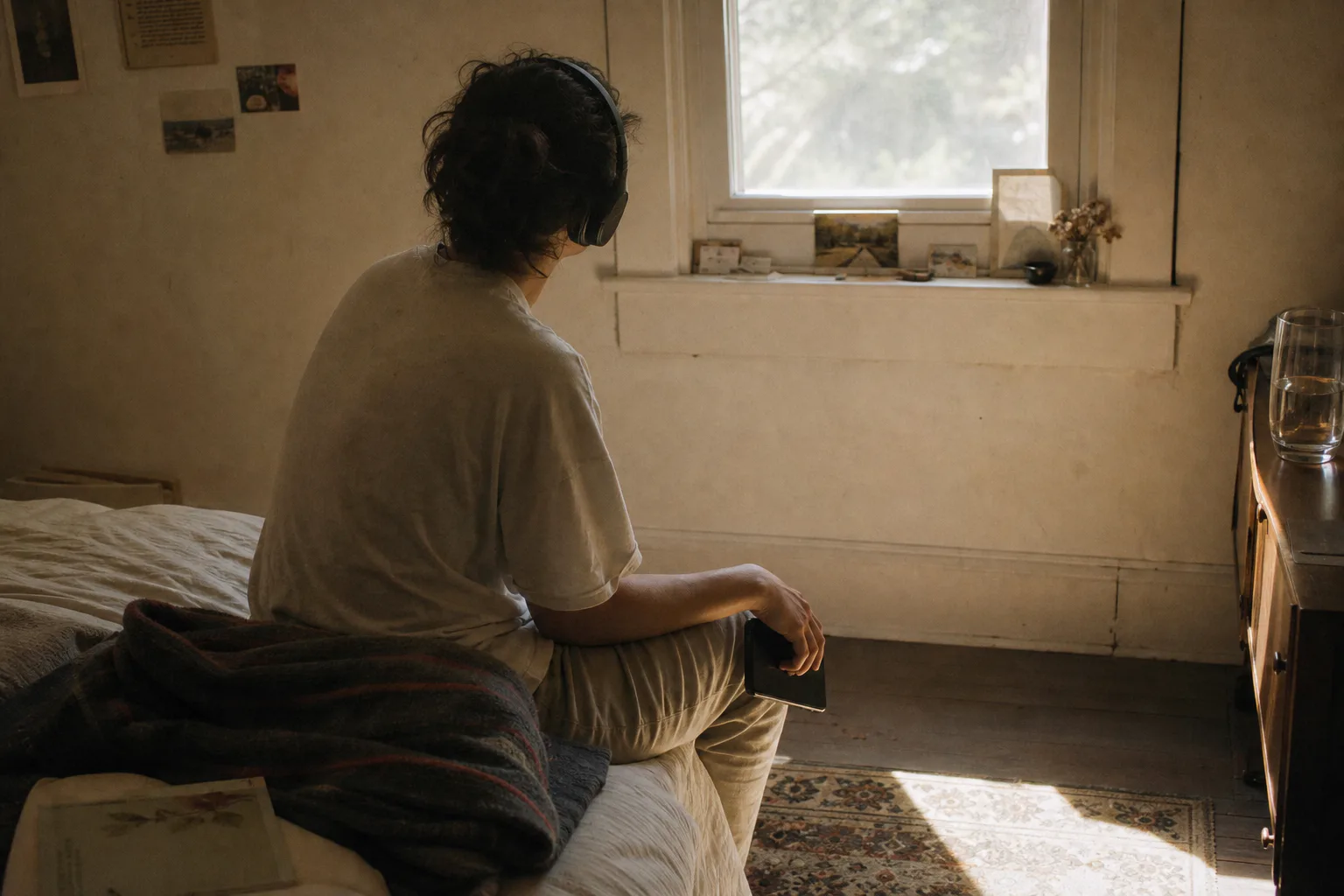
A joe dispenza meditation can be beautiful, but it often asks for more time, stillness, and focus than a normal morning gives. A 5-minute future-self audio is the quieter alternative: you listen to a personalized scene of your desired life, repeat it daily, and let the self-image become familiar.
What does a Joe Dispenza meditation ask of you?
A Joe Dispenza meditation usually asks you to sit longer, regulate your body, focus your attention, and rehearse a new inner identity before the day begins.
Dispenza’s work often brings together breath, attention, elevated emotion, and mental rehearsal. His books, including Breaking the Habit of Being Yourself and Becoming Supernatural, are built around the idea that the body can become conditioned to familiar states, and that meditation can help loosen that pattern. Many of his guided sessions run 30 minutes or more. Some workshop practices go much longer.
That length matters. It isn’t a moral problem. It’s a design problem. A 2020 review in Mindfulness noted that home meditation adherence varies widely, and many people struggle to keep a formal practice going after the first weeks. The body may like the practice. The calendar may not.
There is also the style of attention. A typical joe dispenza meditation may ask you to move beyond familiar thought, sense the body differently, or hold a future state as emotionally real. For some readers, that feels like home. For others, it becomes another place to fail quietly before 8 a.m.
A practice that asks too much too soon becomes a mirror for resistance. A practice that fits your real day can become a door.
You don’t need to choose a side. You can respect the depth of Dispenza’s method and still choose a smaller daily form. In behavior design, BJ Fogg’s research at Stanford has repeatedly shown that tiny actions are more likely to stick when they attach to an existing routine. A 5-minute audio can sit beside brushing your teeth, making tea, or turning off your alarm.
The question is not whether long meditation is better in theory. The question is whether you can return to it on a Tuesday.
How is 5-minute future-self audio different?
Future-self audio is different because it gives the mind a specific identity to hear, not a long meditative state to maintain.
The AYA Method is a daily audio manifestation practice. Each day you listen to a short personalized recording — your Dream-Self Moment — narrated from the version of you who has already manifested the life you intend. Listening is the practice. Repetition is the work. The audio is the method.
That distinction is small, and it changes the feel of the whole ritual. You don’t sit down to perform calm. You listen. The recording holds the structure for you. It speaks from the future as if it is already true, so the desired self isn’t a concept you chase. It is a voice you recognize.
Neuroscience doesn’t give a simple proof for manifestation. It does, however, support the value of mental rehearsal. In sports psychology, imagery rehearsal has been studied for decades; a 2012 meta-analysis in Psychology of Sport and Exercise found that imagery can improve performance when it is structured and repeated. The mechanism isn’t magic. It is attention, memory, emotion, and practice.
Future-self audio uses that same human capacity in a softer way. You hear a scene. You hear your choices described as already normal. You let the nervous system meet the idea without needing to force belief.
A future self becomes easier to choose when she stops sounding like a stranger.
This is where manifestation becomes less theatrical and more intimate. It isn’t a demand that life answer instantly. It is a daily return to the version of you who can take the next honest step.
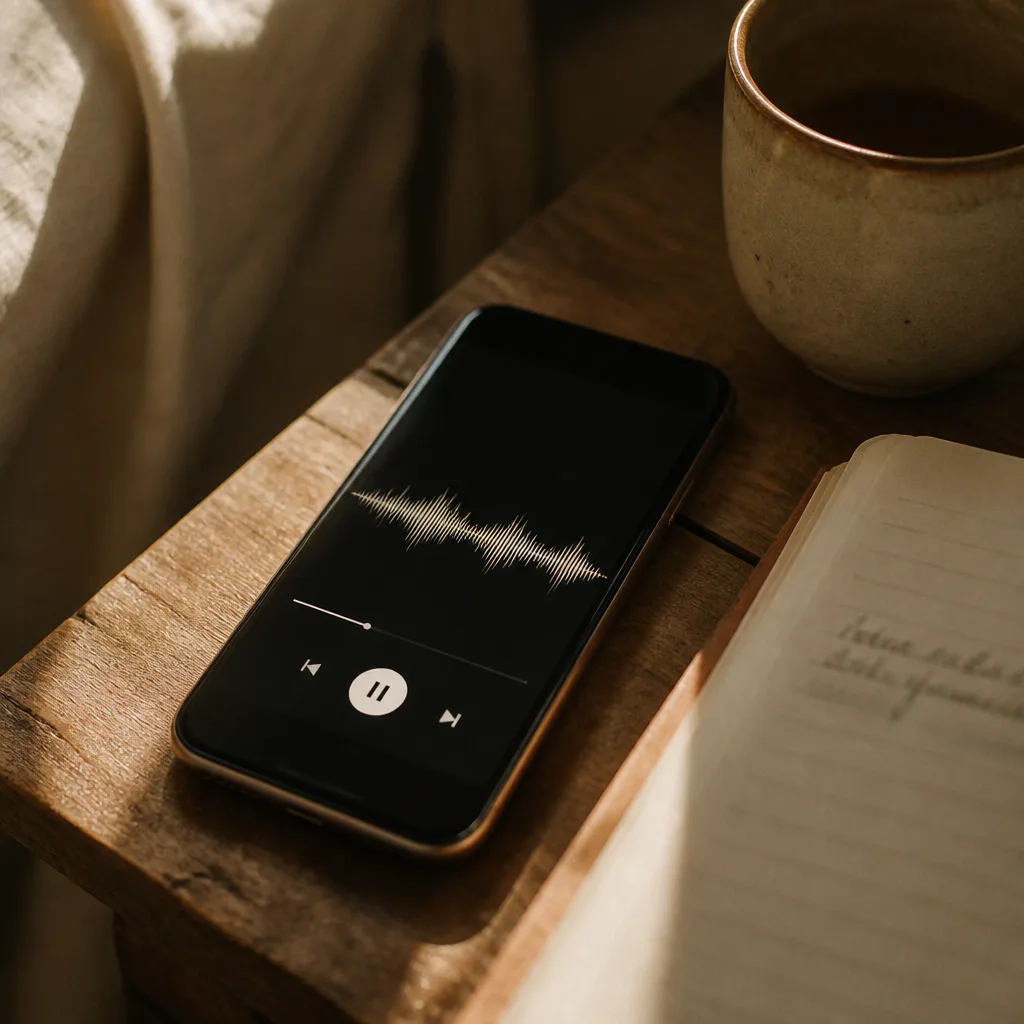
Which practice fits a real morning better?
The practice that fits a real morning is usually the one with fewer setup costs and a clear start.
Most people don’t wake into silence. They wake into notifications, children, deadlines, dishes, or the ache of sleep debt. The CDC reported in 2022 that about 1 in 3 adults in the United States doesn’t get enough sleep. Asking that person for a long morning meditation may be kind. It may also be unrealistic.
A 5-minute audio has a different contract. It can happen before your feet touch the floor. It can happen while the kettle boils. It can happen after you park the car, before you become useful to everyone else.
Here is the comparison in plain terms:
| Practice | Time needed | Main action | Best for | Common friction |
|---|---|---|---|---|
| Joe Dispenza meditation | 30–60+ minutes | Sit, breathe, focus, rehearse | Longer quiet windows | Time, intensity, consistency |
| Future-self audio | 5 minutes | Listen to a personalized scene | Daily repetition | Remembering to press play |
| Written affirmations | 2–10 minutes | Read or write statements | Quick mindset cue | Feeling flat or generic |
| Vision-style board | 5–20 minutes | Look at chosen images | Visual memory | Becoming decorative only |
The shortest practice is not always the shallowest one. A small ritual repeated 300 times has a different weight than a beautiful ritual done twice.
A 2009 study in the European Journal of Social Psychology found that habit formation took a median of 66 days, with wide variation from 18 to 254 days. That range should make you kinder to yourself. It also suggests that repeatability matters more than drama.
If you love a long joe dispenza meditation, keep it. Let it be your deeper session. But for ordinary days, a 5-minute future-self audio may protect the thread. The point is not to do less. The point is to do what can live.
You can pair the audio with one sentence from the Affirmations pillar if words help you land. Just keep the order clear. In Aya, the audio leads. The affirmation supports.
What does the research say about repetition and self-image?
The research says repeated mental cues can shape attention, behavior, and self-story, especially when they are specific and emotionally believable.
Self-image isn’t only an idea you hold. It is a pattern you keep rehearsing. Cognitive behavioral therapy has worked with this for decades: repeated thoughts can become familiar interpretations, and familiar interpretations can influence action. A 2018 review in Cognitive Therapy and Research described mental imagery as more emotionally charged than verbal thought for many people, which is one reason imagined scenes can feel so real.
That matters for manifestation practices. A vague wish often stays vague. A scene with sensory detail gives the mind something to return to. A voice saying, “You handled the meeting with steadiness,” gives you a sharper cue than “I am successful.”
This doesn’t mean every thought creates an outer event. That claim is too clean. Princeton’s former Global Consciousness Project explored correlations between random number generators and collective events from 1998 onward, but its interpretations remain debated. A careful practice doesn’t need exaggerated certainty. It needs honest repetition.
A future-self audio works because it narrows the question. Instead of asking, “Can I change my whole life today?” it asks, “Can I listen for 5 minutes, and act from that remembered self once?”
Try this simple sequence:
- Choose one future scene that feels specific, not huge.
- Listen at the same time each day for 7 days.
- After listening, name one small action that belongs to that self.
- Do the action before the day gets loud.
- Keep the scene stable long enough for it to become known.
Seven days won’t remake a life. But seven days can show you whether the practice has a place to stand. In small meditation studies, participants often report changes in perceived stress after brief daily practice windows of 5 to 10 minutes, though results vary by design and sample size.
The body trusts what it meets often.

When should you choose Joe Dispenza meditation instead?
Choose Joe Dispenza meditation when you have the time, appetite, and nervous system space for a longer inward practice.
There are days when 5 minutes is not enough because you want to be held by a wider container. A longer guided meditation can give you that. Dispenza’s work may suit you if you like extended breathwork, science-framed teaching, and the feeling of entering a deep inner process. Many people find meaning in the discipline itself.
Time is not the only factor. Some people need a practice that interrupts their usual state strongly. A 45-minute session can create a boundary the phone cannot cross. A retreat, workshop, or long morning sit can mark a threshold in a way a short audio does not.
Still, intensity has a cost. In a 2019 Pew Research Center report, 40% of U.S. adults said they meditate at least sometimes, yet regular daily practice is much less common across surveys. The gap between interest and repetition is the whole issue.
Use this quiet checklist:
- Choose Joe Dispenza when you have 30 minutes and want depth.
- Choose future-self audio when you have 5 minutes and need continuity.
- Choose a written affirmation when you need one sentence to carry.
- Choose a visual cue when your mind remembers through images.
- Choose rest when the body is asking for sleep, not self-improvement.
The last point is not a loophole. Sleep is not the enemy of manifestation. Dr. Andrew Huberman has often emphasized that sleep supports learning, emotional regulation, and memory consolidation. If your practice steals rest every morning, it may be taking from the very system it hopes to support.
There is no prize for making a ritual harder than it needs to be.
How can you use both without making the practice messy?
Use one practice as the daily thread and the other as the deeper session, so your mind knows what to expect.
For most people, the daily thread should be the smaller one. Five minutes is easier to protect. Then a longer joe dispenza meditation can become a weekly or occasional practice, something you choose when there is space. This keeps the door open without turning your morning into a negotiation.
A simple rhythm might look like this:
| Day type | Practice | Why it works |
|---|---|---|
| Normal weekday | 5-minute future-self audio | Low friction, high repeatability |
| Slow weekend | Longer Joe Dispenza meditation | More room for stillness |
| Stressful day | Audio plus one grounding breath | Keeps the thread intact |
| New moon or monthly reset | Audio plus Manifestation Board review | Makes the intention visible |
If you already use timing, symbols, or lunar markers, you may like pairing the audio with reflective dates. Astrology and manifestation can offer a calendar language for intention, as long as it stays supportive rather than controlling. The date is not the method. It is a reminder.
You can also read more broadly through the Manifestation pillar when you want the larger frame, then return to the small act. If you are comparing tools, a page on manifestation techniques can help you name what each practice is actually doing.
Keep the center simple. Audio first. A daily affirmation if it helps. A Manifestation Board when seeing the life makes it feel closer. These are complements. They are not equal pillars.
The cleanest practice is the one you can remember when you’re tired.
What should you listen for in a future-self audio?
Listen for specificity, emotional honesty, and a future self who sounds close enough to become yours.
A useful future-self audio does not flatter you into fantasy. It names the life you intend with details you can feel: the room, the pace, the way you answer a message, the steadiness in your chest before a conversation. It should sound like a remembered future, not a sales pitch.
This matters because the brain treats concrete language differently from vague language. Research on implementation intentions by Peter Gollwitzer has shown that specific “if-then” plans can improve follow-through across many behaviors. Specificity gives action a handle. A future-self scene does something similar for identity.
Good audio may include:
- a clear setting, such as morning light, a desk, a train, or a doorway
- one emotional tone, such as calm, devotion, relief, or quiet confidence
- one or two choices your future self makes differently
- language that feels believable in your mouth
- enough repetition that the scene becomes familiar, not stale
Be cautious with audio that promises instant certainty. Belief often arrives in layers. Neville Goddard wrote about assuming the feeling of the wish fulfilled, and many readers still find that phrase useful. But “feeling” doesn’t need to mean dramatic emotion. Sometimes it means the soft click of recognition: yes, I know this version of me.
If a joe dispenza meditation gives you a deep state, let it. If a 5-minute audio gives you daily contact, let that be enough. The future self doesn’t need you to strain toward her. She needs you to keep answering.
Return once. Then again.
Softly is still a way through.