manifestation 101
Manifestation Hypnosis vs Future-Self Audio Before Sleep
Manifestation hypnosis and future-self audio both use suggestion before sleep, but they differ in control, repetition, tone, and daily use.
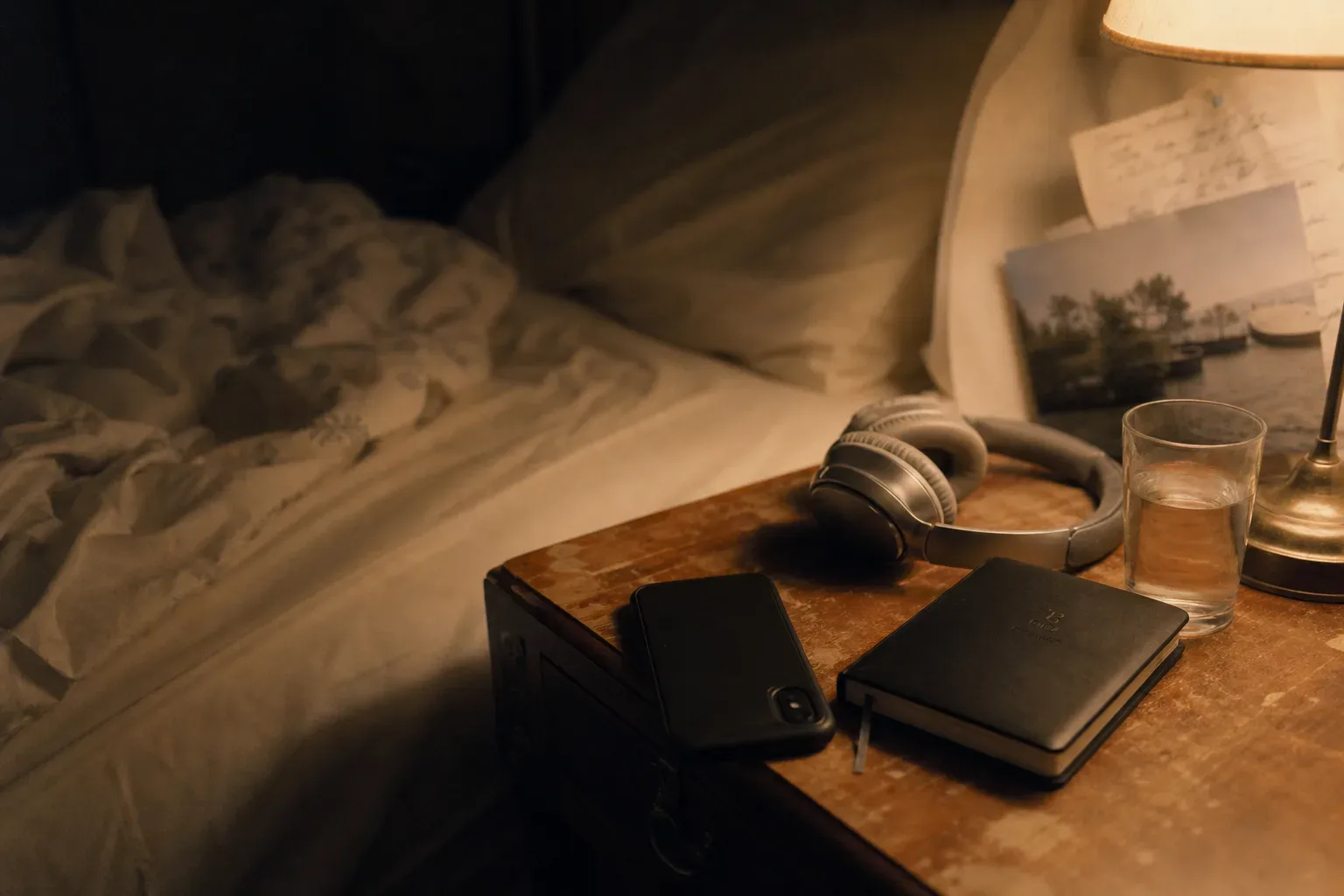
The room is dark. Your phone is face down. Manifestation hypnosis and future-self audio both use the mind’s suggestible edge before sleep, but they are not the same practice. Hypnosis guides you into a receptive state. Future-self audio gives you a specific identity to rehearse, night after night.
What is manifestation hypnosis, really?
Manifestation hypnosis is guided suggestion used while your attention is relaxed, usually to help you picture and accept a desired reality.
Most recordings follow a simple arc: settle the body, slow the breath, narrow attention, introduce images, repeat suggestions, then return or drift into sleep. Clinical hypnosis has been studied for pain, anxiety, and habit change for decades. A 2016 review in The International Journal of Clinical and Experimental Hypnosis noted that hypnosis can help some people with sleep concerns, though study sizes and methods vary. That caveat matters. Hypnosis is not magic. It is a state-based tool.
In manifestation hypnosis, the suggestions tend to be broad. You may hear phrases like, “You are worthy,” “You receive what you desire,” or “Your dream life is already here.” Some people find this soothing. Others feel a small resistance in the body. The mind may say yes while the deeper self says, not yet.
That is where specificity matters. A generic suggestion can calm you for 20 minutes. A precise inner picture can return to you on Tuesday morning, while you are brushing your teeth. Research on mental rehearsal in sport psychology has often used repeated imagery sessions, sometimes 10 to 15 minutes, to improve confidence and skill performance. The point is not fantasy. The point is rehearsal.
A suggestion becomes useful when it feels close enough to believe and clear enough to repeat.
Manifestation hypnosis can be part of a manifestation practice, especially when you are tired and willing to be guided. But the word “hypnosis” carries weight. If it makes you tense, you do not need it. The doorway is not the label. The doorway is attention.
What is future-self audio before sleep?
Future-self audio is a short recording that lets you hear the life you intend as if it is already familiar to you.
This is the heart of the AYA Method: The AYA Method is a daily audio manifestation practice. Each day you listen to a short personalized recording — your Dream-Self Moment — narrated from the version of you who has already manifested the life you intend. Listening is the practice. Repetition is the work. The audio is the method.
The difference is subtle until you feel it. A hypnosis track may say, “You are becoming calm and open.” A Dream-Self Moment might say, “You wake up in the apartment that feels like yours. You answer messages from the work that respects your time. You know what belongs to you now.” One speaks to a state. The other speaks from a lived identity.
Before sleep, this can be especially clean. The National Sleep Foundation has long described the pre-sleep period as a time when routine cues help the body learn what comes next. In sleep research, consistency is not decorative; it is one of the main signals. If you listen at roughly the same time for 7 nights, the recording begins to belong to the room.
There is also less to do. You do not need to write three pages. You do not need to look perfect in candlelight. You listen. The app may also include a daily affirmation or a Manifestation Board, but those are complements. The audio is the method.
A future self is not a stranger you chase. It is a version of you your attention learns to recognize.
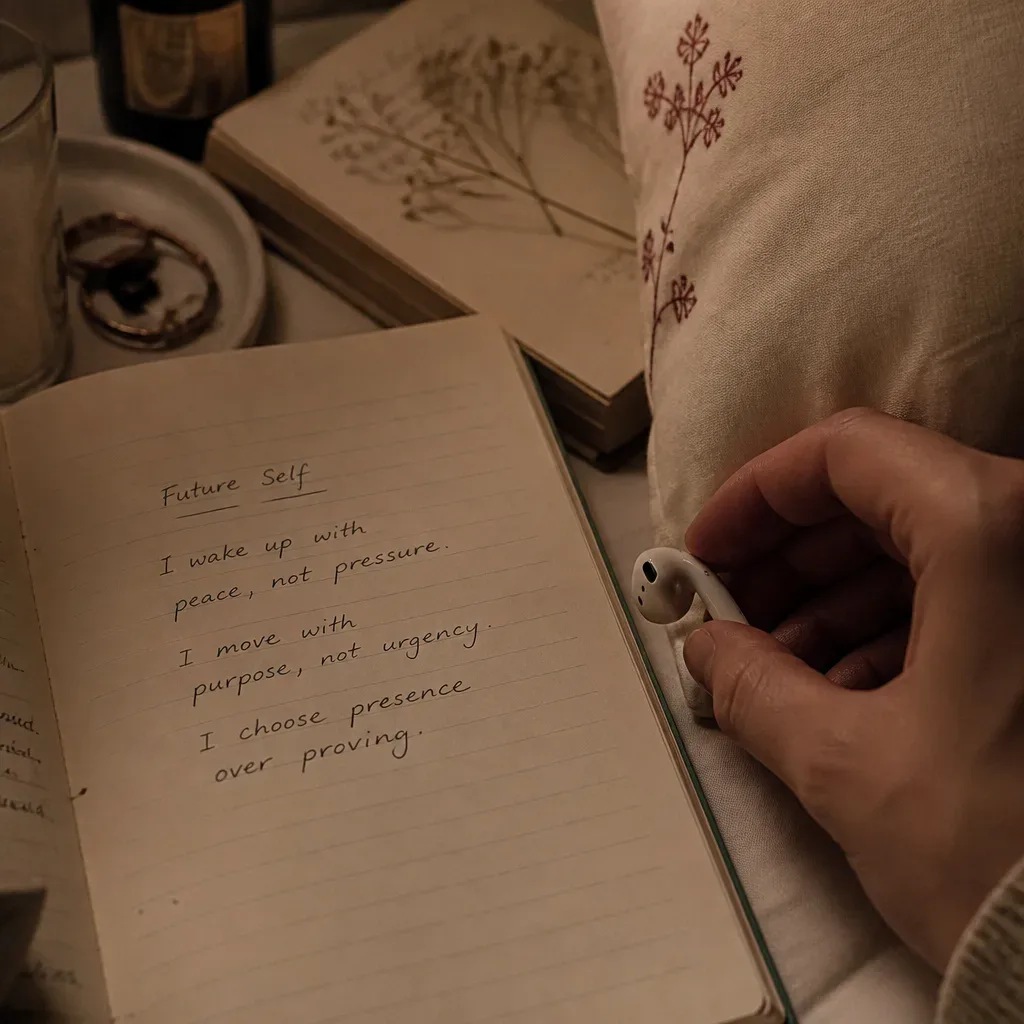
How are the two practices different before sleep?
The clearest difference is control: hypnosis changes your state first, while future-self audio gives your attention a repeated self-image first.
Here is the quiet comparison.
| Question | Manifestation hypnosis | Future-self audio |
|---|---|---|
| Main focus | Relaxed suggestibility | Familiar identity rehearsal |
| Typical length | 15 to 45 minutes | 3 to 10 minutes |
| Voice | Often general guidance | Personal, specific narration |
| Best time | When you want to be led | When you want a daily cue |
| Risk | May feel too intense for some | May feel too direct if poorly written |
| Core action | Enter a receptive state | Listen to your Dream-Self Moment |
The length matters more than people admit. A 45-minute recording can be beautiful, but if you fall asleep after 6 minutes every night, the practice is really 6 minutes long. That is not failure. It is data. Behavioral design research often points to friction as a deciding factor in habit formation. BJ Fogg’s model at Stanford, for example, places ability and prompt beside motivation. A ritual you can repeat while tired has an advantage.
Manifestation hypnosis may use induction techniques: counting down from 10, progressive muscle relaxation, or breath pacing. Future-self audio does not need to induce trance. It may relax you because the voice is slow and the content is safe, but relaxation is not the whole point. The point is recognition.
The two can overlap. A future-self recording can begin softly. A hypnosis recording can include future pacing. Still, the center of gravity is different. Hypnosis says, “Enter this state.” Future-self audio says, “Remember who you are becoming, until it feels already known.”
If you are comparing tools, ask how you respond after the recording ends. Do you feel soothed only while it plays? Or does one line follow you into tomorrow? A practice that survives daylight is worth noticing.
Which one works better for belief and repetition?
Future-self audio often works better for repetition, while manifestation hypnosis may work better for occasional deep relaxation.
Belief is not only a thought. It is also pattern. If you hear the same self-description 30 nights in a row, the words become easier to access. In cognitive psychology, repeated exposure can increase familiarity; the “mere exposure effect,” named by Robert Zajonc in 1968, showed that repeated contact with a stimulus can increase preference. Your future-self recording is not a laboratory shape on a screen, but the principle is useful. Familiar things feel less foreign.
Neville Goddard wrote often about living from the wish fulfilled. Joe Dispenza speaks about rehearsing a future state until the body begins to know it. You do not need to adopt every claim from either teacher to see the shared thread: repetition trains recognition. One sentence, heard often enough, can become a place you return to.
This is also where affirmations fit best. An affirmation can be a small companion to the audio, especially during the day. But if an affirmation feels too far from your current self, it may create friction. A line like “I am completely confident” can sound false on a hard morning. A future-self line can be more textured: “I speak slowly. I do not rush to prove myself.” That is easier to practice.
Use this simple check:
- Does the wording feel specific? Name the room, the work, the relationship, the body sensation.
- Does it feel believable enough? Not fully proven. Just not insulting to your truth.
- Can you repeat it for 14 nights? If not, make it shorter.
- Does it soften the next day? Look for one small behavior, not a dramatic sign.
Belief does not always arrive as certainty. Sometimes it arrives as less argument.
What should you choose if you are anxious, skeptical, or tired?
Choose the practice that lowers pressure and keeps your sense of choice intact.
If you are anxious, long hypnosis tracks can sometimes feel too enclosing. Being told to relax for 30 minutes may remind the body that it is not relaxed. The American Psychological Association notes that hypnosis involves focused attention and reduced peripheral awareness, but people vary in hypnotic responsiveness. Some are highly responsive. Some are not. You are not broken if you stay alert.
If you are skeptical, future-self audio may be easier because it does not require you to believe in hypnosis. It asks for repetition. That is more ordinary. You can treat it like design for attention: same cue, same time, same small behavior. A 2020 study in the European Journal of Social Psychology is often cited for habit timing, though the original 2009 Lally study found habit automaticity took a median of 66 days, with a wide range from 18 to 254 days. So give the practice time.
If you are tired, be honest about what you can actually do. A short audio before sleep may beat a perfect ritual you keep postponing. This is why the AYA Method keeps the listening central. You do not have to perform belief. You do not have to be impressive. You listen again.
You might prefer manifestation hypnosis if:
- you like being guided step by step
- your body responds well to breath and counting
- you want occasional long relaxation
- you enjoy symbolic imagery
You might prefer future-self audio if:
- you want the same practice daily
- personal language matters to you
- you like short rituals
- you want your desired life described in concrete terms
Skepticism can be clean. It can keep the practice honest. Let it ask for evidence in your behavior, not fireworks in your mind.
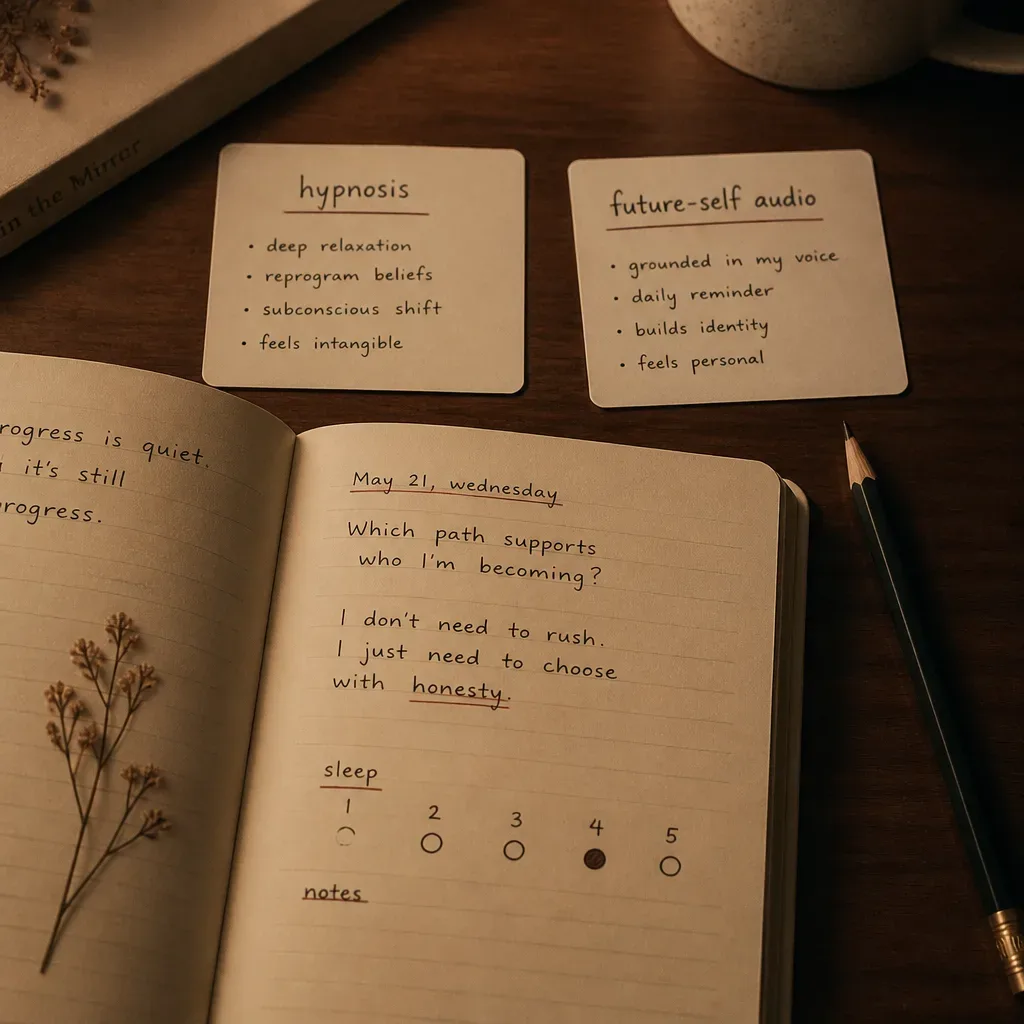
How can you compare results without fooling yourself?
Compare the practices by tracking small next-day signals, not by chasing a dramatic feeling at night.
You can test both for 14 nights each. That is long enough to notice friction, but short enough to stay kind. Use one recording per phase. Do not change five variables at once. In behavior research, clean measurement matters. If you use hypnosis, journaling, breathwork, new supplements, and a new bedtime at the same time, you will not know what helped.
Try this simple comparison plan:
- Nights 1 to 14: Use one manifestation hypnosis recording before sleep.
- Nights 15 to 16: Take 2 quiet nights with no audio, or use plain sleep sounds.
- Nights 17 to 30: Use one future-self audio recording before sleep.
- Each morning: Rate sleep ease, mood, and one action from 1 to 5.
- At the end: Choose the practice you actually repeated.
Your notes can be plain. “Fell asleep fast.” “Felt resistant.” “Remembered the line about money.” “Sent the email.” The Centers for Disease Control and Prevention has reported that about 1 in 3 U.S. adults do not get enough sleep, so be careful not to blame manifestation for basic exhaustion. If caffeine, stress, or an irregular bedtime is loud, the audio may be doing its best inside a crowded room.
Also notice your language during the day. Do you speak to yourself with less harshness? Do you make one decision from the future self rather than the old fear? In astrology and manifestation, timing can be used as a reflective frame. Still, the measure is lived behavior. The moon can mark the page. You still write the sentence.
The truest practice is the one that changes how you meet the ordinary hour.
Can the two practices work together?
Yes, but they should not compete for the same job.
If you like both, let manifestation hypnosis be occasional and let future-self audio be daily. For example, you might use a longer hypnosis recording once or twice a week when your body needs help settling. Then, on most nights, you listen to your Dream-Self Moment for 5 minutes. This keeps the daily cue clear. Repetition needs a stable object.
A common mistake is stacking too much before sleep. Ten tools can make the nervous system feel watched. One study from the American Academy of Sleep Medicine found that consistent bedtime routines are associated with better sleep outcomes in children, and adult sleep hygiene guidance also emphasizes regularity. The principle is simple: the body learns by cues. Too many cues become noise.
You can make a quiet rule:
- If you need regulation, use hypnosis.
- If you need identity rehearsal, use future-self audio.
- If you need daytime support, use one affirmation from the recording.
- If you need a visual anchor, update your Manifestation Board, then leave it alone.
The Manifestation pillar can help you name the wider practice, and the Affirmations pillar can help with language that does not fight your body. But the bedtime practice stays small. The audio goes on. The light goes off.
If a recording starts to feel stale, do not immediately abandon it. First, ask whether the desire has changed or whether your attention is simply looking for novelty. Many habit studies show that consistency is less exciting than starting, but it is where the evidence gathers. A practice does not need to thrill you every night to be true.
Tonight can be small, and still be yours.