manifestation 101
Future Self Letter Manifestation: Make It Audio
Future self letter manifestation becomes easier to repeat when you turn the letter into a short audio practice you can keep each morning.
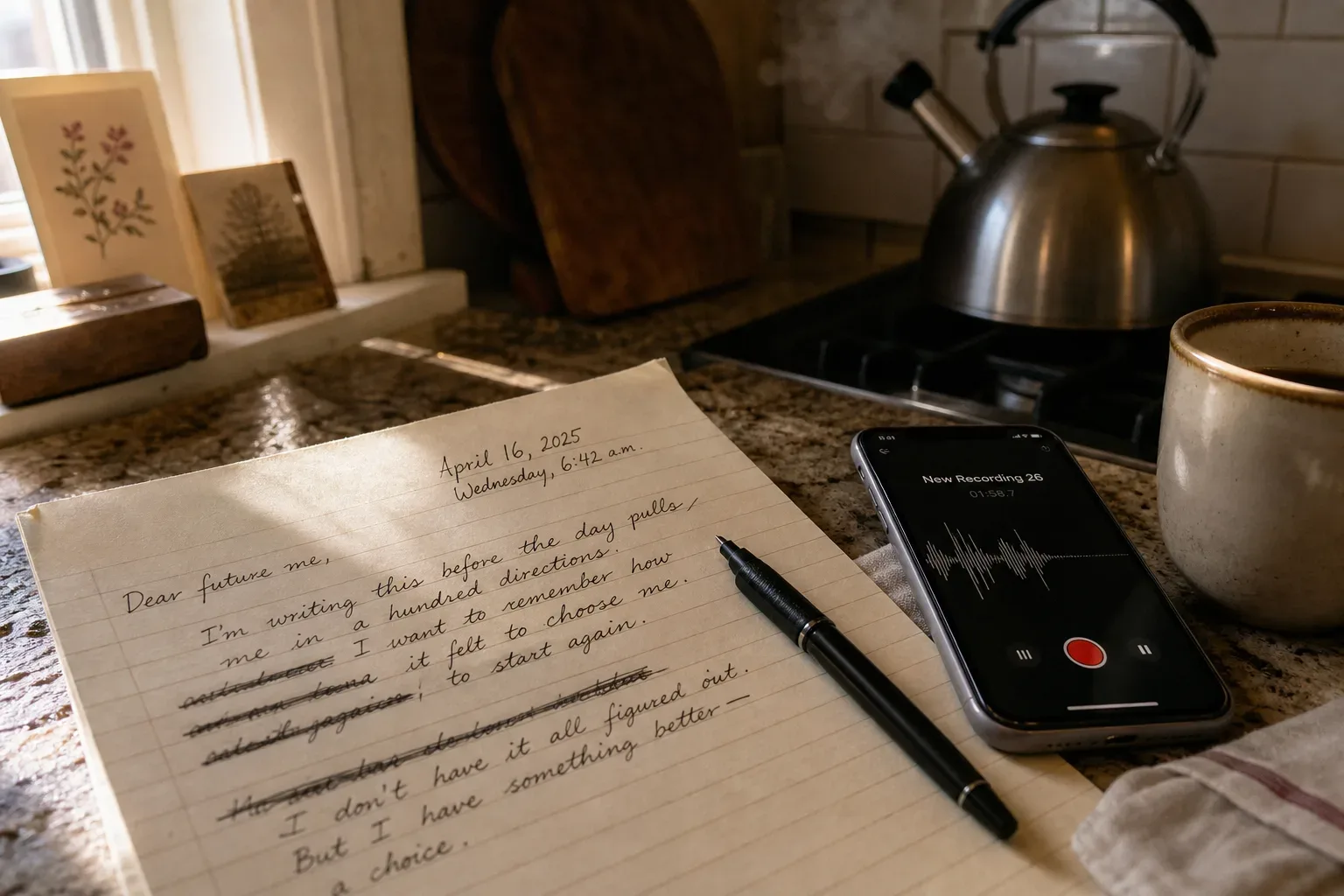
Saturday. The kettle clicked off while my phone recorded on the counter. Future self letter manifestation works best when the letter stops being a document and becomes something I can hear every day. I write it in a believable future voice, record it plainly, then listen at the same small cue until the identity feels practiced.
What is future self letter manifestation, really?
Future self letter manifestation is a written rehearsal of identity that becomes stronger when it names ordinary future behavior in detail.
I used to write letters that sounded like speeches. They had big nouns and no dishes in the sink. They did not mention the bus, the invoice, my mother calling, or the blue mug I keep by the stove. After testing more wellness apps than I can politely remember, I now trust practices that survive Tuesday. A useful letter has to survive Tuesday.
The basic idea sits inside the wider practice of manifestation, but I keep it more grounded than the internet often does. I am not asking the page to perform magic. I am using the page to rehearse attention. Psychologist James Pennebaker’s expressive writing studies often used 15 to 20 minutes of writing across 3 or 4 days, and the measurable effects were not mystical; people organized emotion, meaning, and memory with more coherence.
A future self letter works when it changes the question from what do I want to who am I practicing being at 8:10 on an ordinary morning. That shift matters. In habit research, repetition tied to context is more durable than intensity tied to mood. Phillippa Lally’s 2009 study in the European Journal of Social Psychology found a median of 66 days for a new behavior to feel automatic, with wide variation from 18 to 254 days.
I keep this sentence in my notebook: future self letter manifestation is not a wish list; it is a rehearsal of identity. That line has saved me from writing decorative paragraphs. The letter should make tomorrow’s first honest action easier to see.
Why turn the letter into audio instead of just reading it?
Turning the letter into audio makes it easier to repeat because listening asks less of a tired morning than reading does.
This is the part that changed the practice for me. A handwritten page is beautiful, but it asks for a chair, light, attention, and a certain willingness to look directly at myself. Audio can ride along with the kettle. Audio can sit beside brushing teeth. Edison Research’s 2024 Infinite Dial report found that 47% of Americans age 12 and older had listened to a podcast in the past month, which tells me something simple: people already know how to let spoken words accompany life.
I think of audio as less glamorous and more useful. The audio is not decoration; it is the delivery system. When I am half-awake, I do not need another blank page. I need a voice I already chose on a better day.
This is why I kept returning to the AYA Method after deleting other apps. The definition is precise enough to respect: The AYA Method is a daily audio manifestation practice. Each day you listen to a short personalized recording, your Dream-Self Moment, narrated from the version of you who has already manifested the life you intend. Listening is the practice. Repetition is the work. The audio is the method.
That last sentence is why a future self letter belongs in the ear. Neville Goddard wrote often about assuming the feeling of the wish fulfilled, and Joe Dispenza teaches mental rehearsal as a way of pairing emotion with imagined future behavior. I am cautious with big claims, but I have seen the smaller truth: what I hear repeatedly becomes easier to remember under pressure.
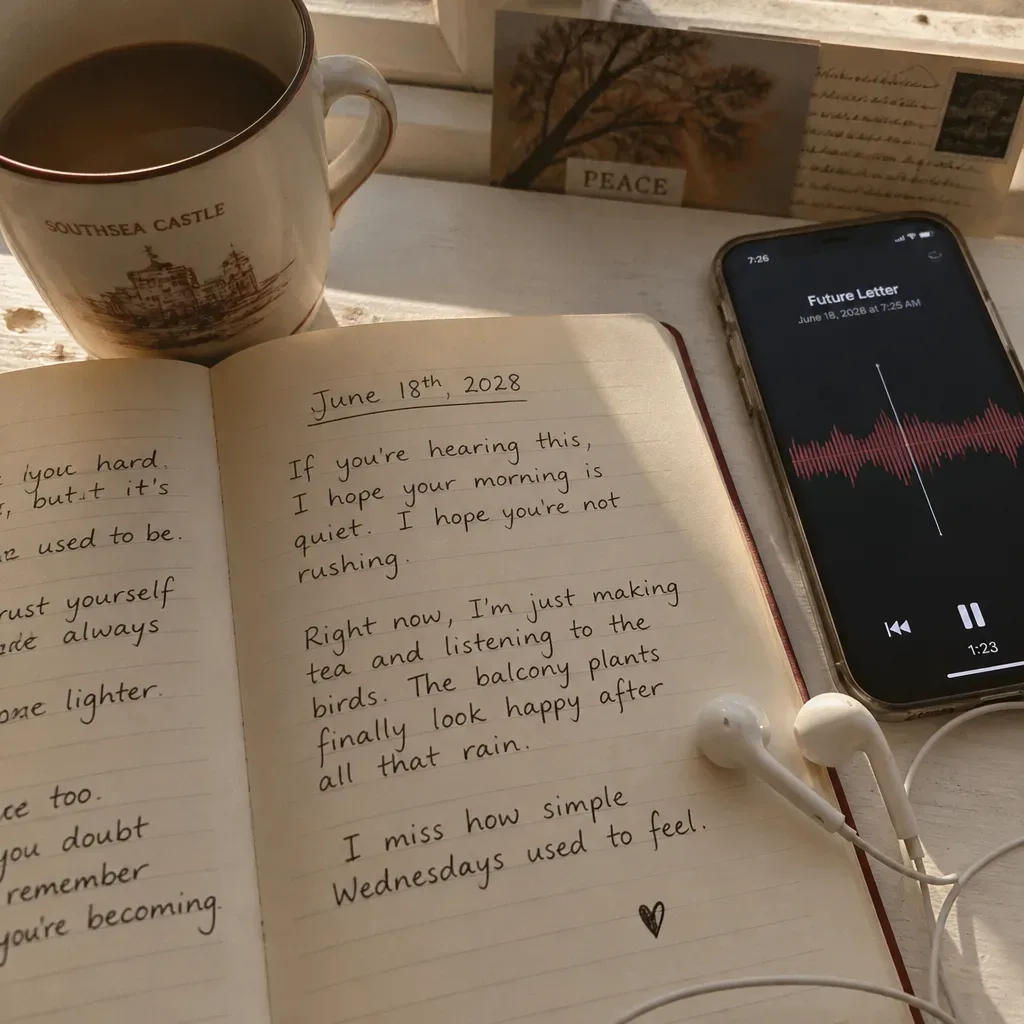
How do I write the letter so it sounds like my future self?
I write the letter as a dated, ordinary scene from 6 to 12 months ahead, using concrete behaviors instead of inflated promises.
This morning, I wrote October 17th at the top even though it is not October in my kitchen as I draft this. I chose a date close enough that my body did not laugh. Six months works for me. Twelve months also works. Ten years makes me perform. A future self voice should sound steadier than the current self, not like a stranger with better lighting.
Here is the order I use when the page feels stiff:
- Date the letter from a specific future morning.
- Start with one ordinary object in the room.
- Name 3 behaviors that are now normal.
- Name 1 thing I stopped rehearsing.
- Describe 1 relationship, work pattern, or money choice that has changed.
- End with the next action I would take today.
The number matters because limits keep the letter honest. Cognitive load research from George Miller’s older work suggested people can hold around 7 items, plus or minus 2, in working memory, though later research argues the number is often closer to 4. Either way, a letter with 23 intentions is usually a fog machine.
I use affirmations differently. A daily affirmation might be one line, such as I keep promises to my morning. The future self letter gives that line a room to live in. It says what I did with my phone, how I answered the email, what I did not buy, and when I went to bed.
| Weak sentence | Better audio sentence |
|---|---|
| I am successful and happy. | I close the laptop at 6:20 because the work is planned, not leaking. |
| Money comes easily. | I check the account every Friday and send the invoice before lunch. |
| I am confident. | I speak slowly in the meeting and do not apologize for taking 20 seconds to think. |
A believable sentence has handles. I can pick it up tomorrow.
How do I record the letter without making it theatrical?
I record it in my normal voice, slowly enough to feel kind, and I leave in the human pauses.
I learned this by doing it badly. My first recording sounded like a guided meditation made by someone trying to win a grant. I lowered my voice. I added warmth I did not feel. I turned the whole thing into a performance, and by the third listen I disliked the man speaking. So I deleted it and recorded again while standing near the sink.
Most conversational speech falls around 140 to 160 words per minute, depending on the speaker and language. For a 4-minute future self audio, that gives me roughly 560 to 640 words. That is enough space for a scene, 3 future behaviors, and a closing line. It is not enough space for a manifesto, which is good. A practice that needs drama to work will usually fail on a boring day.
I use this recording checklist:
- Phone on airplane mode.
- One glass of water nearby.
- Script printed or written clearly.
- One quiet room, not a perfect room.
- Two test sentences before recording.
- One full take, then one cleaner take if needed.
Dr. Andrew Huberman has spoken often about the brain changing through repeated focus and behavior, not through insight alone. I take the modest version of that seriously. If the recording is too polished, I start listening as a critic. If it is too messy, I stop trusting it. The middle is best: plain, audible, slightly tender.
I also avoid background music at first. Music can carry emotion, but it can also hide weak writing. I want to know whether the letter stands on its own. After 7 days, if the words still feel alive, I may add soft sound. Most of the time, I do not need it.
How should I listen to the audio for seven days?
I listen once a day at the same existing cue for seven days, then I revise instead of forcing devotion.
Seven days is not a magic number. It is a test week. Lally’s habit research gives me the longer view, with that 66-day median for automaticity, but 7 days tells me whether the practice respects my life. If I cannot keep it for a week, the issue may not be discipline. The issue may be that I built something too heavy for the morning.
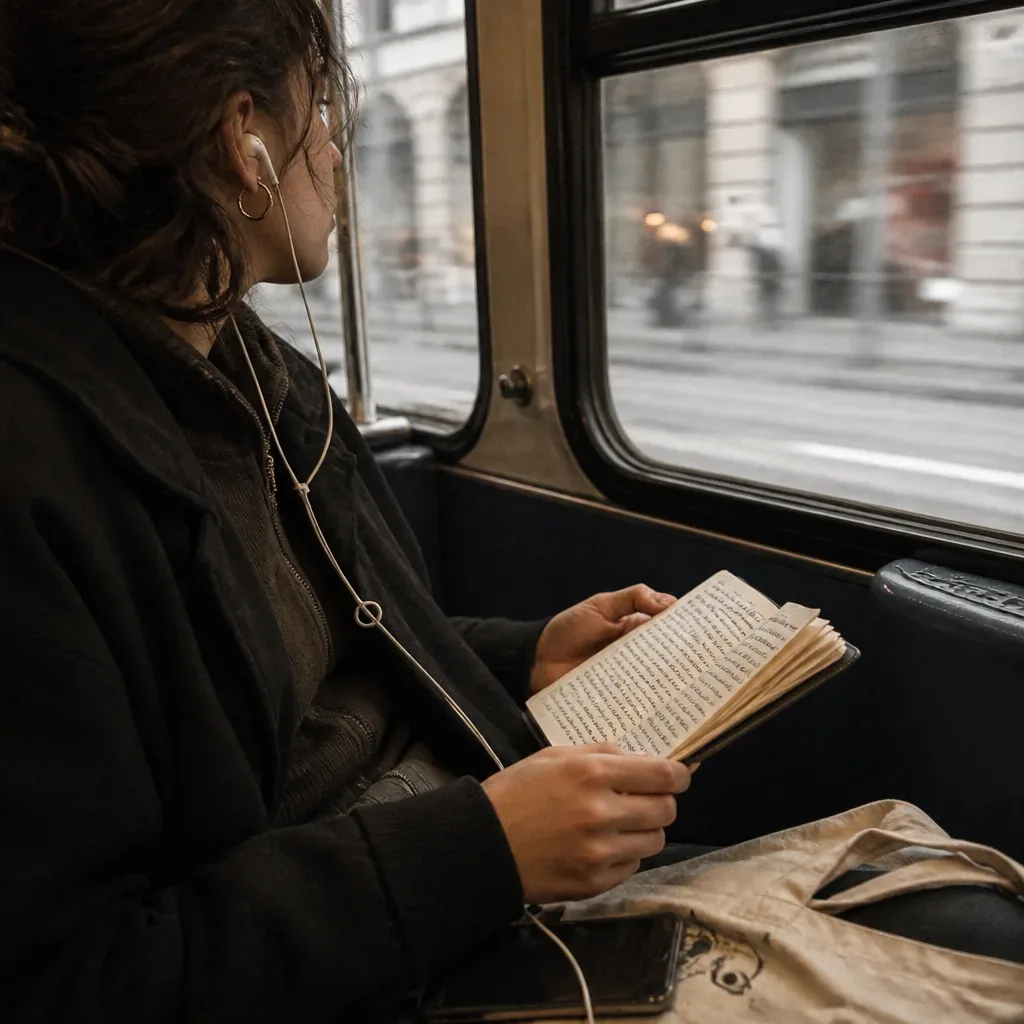
My cue is the kettle. I press play before brushing my teeth. That is the order I do them in. Someone else might listen on the bus, in the bath, or while walking to the train. I do not stack it with ten other rituals. The audio is the method. The daily affirmation and the Manifestation Board can sit nearby as complements, but they do not carry the practice.
This is my 7-day listening plan:
- Day 1: Listen once and notice any sentence that makes the body tighten.
- Day 2: Listen without editing.
- Day 3: Write down one action the audio made easier.
- Day 4: Remove one sentence that feels false.
- Day 5: Add one ordinary detail from real life.
- Day 6: Listen at the same cue, even if the mood is flat.
- Day 7: Decide what stays for the next 21 days.
If timing matters to you, astrology and manifestation can be a gentle way to date the practice. I have used a new moon as a start date before. I do not let it become another reason to postpone. A calendar can bless the work, but it cannot do the listening for me.
What mistakes make a future self letter feel fake?
A future self letter feels fake when it skips the bridge between the current self and the future behavior.
The most common mistake is scale. I write as if I have become an entirely different species by spring. Then I wonder why the recording makes me tired. Gabriele Oettingen’s research on mental contrasting, including the WOOP method, is useful here because it pairs the wished-for future with the present obstacle. In studies across health, school, and behavior change, naming the obstacle often improved follow-through more than positive fantasy alone.
That matches my kitchen data. If I write, I wake at 5 every day and train for an hour, but I currently sleep at midnight and hate mornings, the line is not aspirational. It is fiction without a bridge. A better line is, I put the phone in the hallway at 10:40 and lay out my shoes before bed. It sounds smaller. It is stronger.
| Mistake | Why it fails | Repair |
|---|---|---|
| Grand identity claims | The nervous system rejects them | Write one behavior from tomorrow |
| No obstacle named | The letter avoids reality | Include the friction point plainly |
| Too many goals | Attention scatters | Keep 3 behaviors for 7 days |
| Borrowed language | It sounds like a stranger | Use words you would say in the kitchen |
I also avoid sentences that make me morally superior. The future self is not a shinier person looking down on me. The future self is me with fewer rehearsed loops. That distinction keeps the letter kind.
There is a small body of Princeton Global Consciousness Project research that explored correlations between random event generators and collective events; it is interesting and disputed. I do not build my morning on disputed data. I build it on repeatable behavior I can observe by noon.
How does this fit with the AYA Method and a quiet day?
It fits best when the letter becomes source material for a short audio practice rather than another object to manage.
This is my test for every practice now: after I strip the visual identity, mute the marketing, and remove the clever onboarding, what behavior remains. With future self letter manifestation, the behavior I want is simple. I write from a believable future. I record it. I listen daily. I notice whether my first choices change.
The AYA Method survived that same test because it reduced to a few minutes of personalized listening. The practice did not ask me to become a project manager of my soul. It asked me to hear, again, the version of myself I had named. Repetition is not glamorous. Repetition is how a sentence becomes available when the day gets loud.
I still keep a page sometimes. I still write one daily affirmation on the corner of a receipt if the morning is rushed. I have a Manifestation Board too, but I treat it like a wall note, not the engine. The engine is the audio. The practice should leave fewer open loops at noon than at nine.
Pew Research Center reported in 2024 that about 81% of U.S. adults said they use YouTube, and spoken-word habits keep moving through phones, earbuds, and kitchens. That matters because a practice does not need to fight the device if it can use the device quietly. I do not need another screen to stare into. I need one recording that meets me while the coffee cools.
A future self letter becomes real enough to keep when it sounds like a person I can practice being today. Not someday. Not under perfect conditions. Today, after the kettle, before the inbox.
Saturday still. The cup is empty now.