sleep hypnosis affirmations
Manifest While Sleeping: Use Dream-Self Audio Safely
Can you manifest while sleeping? I tested Dream-Self audio at night and wrote down what helped, what disturbed sleep, and what felt safe.
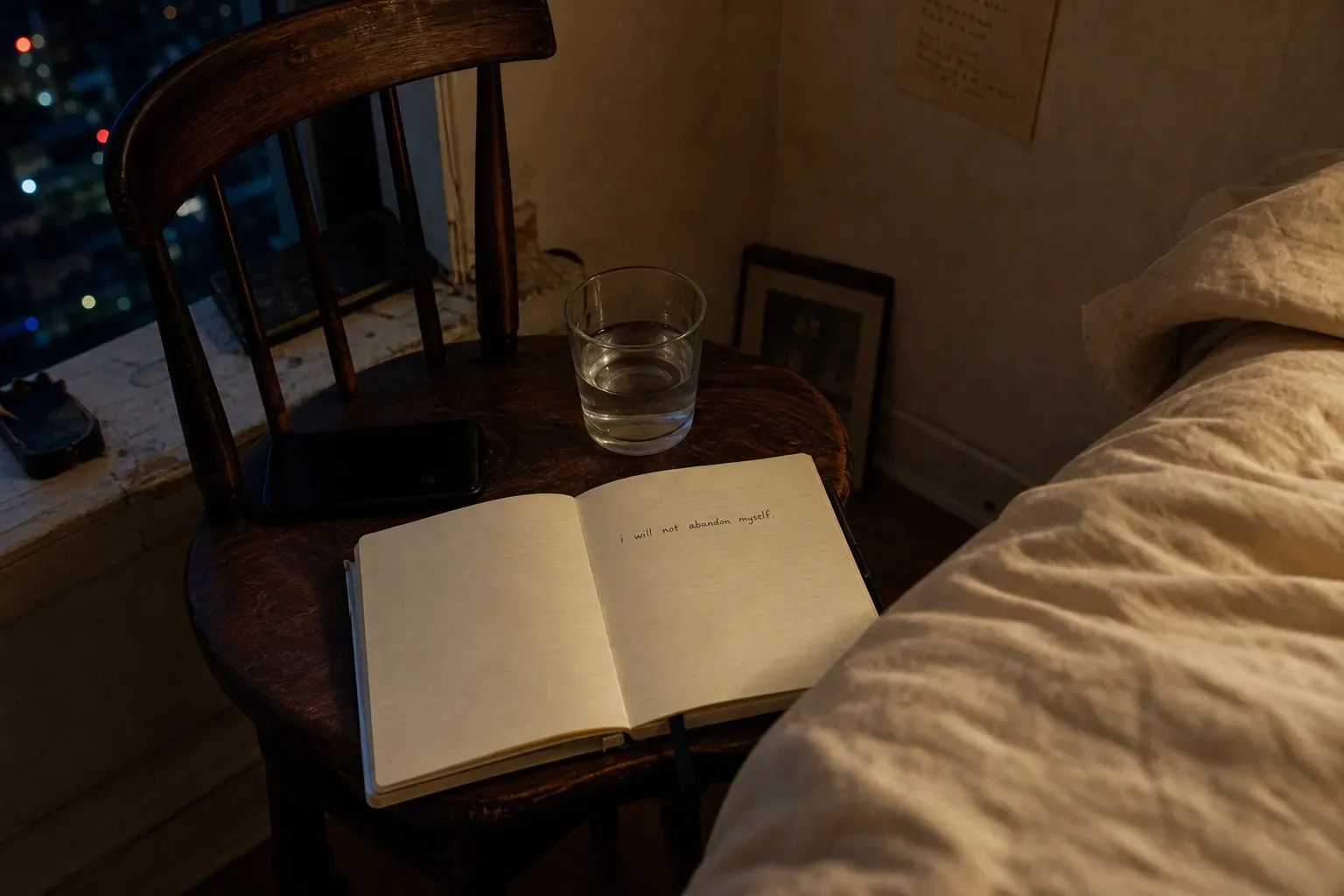
Saturday, 11:08 p.m., the fan beside my bed was louder than my phone. Yes, you can manifest while sleeping by playing Dream-Self audio at night, but I would call it nighttime repetition, not magic sleep labor. The safer practice is to keep the audio short, quiet, familiar, and never more important than sleep itself.
Can I really manifest while sleeping, or am I just playing audio in the dark?
You can use sleep as a quiet repetition window, but the change comes from repeated attention before and around sleep, not from outsourcing your whole life to a pillow.
I am writing this from São Paulo with the window half open and one mosquito making a private argument near my left ear. I have tested too many wellness apps to be impressed by nighttime promises. Most of them dress up a looped recording and call it a breakthrough. Still, I kept returning to audio because repetition has a stubborn dignity. It asks less from me than a perfect morning routine. That matters at 11 p.m.
Sleep is not empty time. The National Sleep Foundation has long described sleep in stages, with adults cycling through non-REM and REM about every 90 minutes. Memory researchers, including Matthew Walker and colleagues, have written for years about sleep’s role in consolidation, especially when something is learned shortly before bed. That does not prove that a sentence whispered under a duvet will rearrange your life by Friday. It does suggest that the hour before sleep is not neutral.
When I use the AYA Method, I treat it more cleanly: The AYA Method is a daily audio manifestation practice. Each day you listen to a short personalized recording, your Dream-Self Moment, narrated from the version of you who has already manifested the life you intend. Listening is the practice. Repetition is the work. The audio is the method.
The sentence I have written in my notebook is this: Sleep can carry a suggestion, but it should not carry the whole burden of your becoming. That line has saved me from turning bedtime into another productivity corner. My test is always behavioral. Did I listen? Did I sleep? Did I wake up with fewer open loops than I carried to bed?
What does sleep science actually say about night audio?
Sleep science supports careful sound use for learning and relaxation, but it does not support aggressive all-night programming as a reliable shortcut.
There are interesting studies here, and they are more modest than the ads. Research on targeted memory reactivation, often called TMR, has shown that sounds linked to earlier learning can sometimes improve later recall when replayed during sleep. A 2013 paper in Nature Neuroscience by Oudiette and Paller reviewed how cues during sleep may influence memory processing. The effect is real enough to study, but it is not a blank check. The cue has to be timed, subtle, and connected to prior learning.
That word prior matters. If I listen to a Dream-Self Moment once while half-asleep, I have not built much for sleep to rehearse. If I listen daily for 7, 14, or 30 days, the recording becomes familiar. Familiarity lowers friction. A 2009 study in the European Journal of Social Psychology by Phillippa Lally and colleagues found habit formation took a median of 66 days, with wide variation from 18 to 254 days. I keep that number close. It makes me more patient and less theatrical.
Night sound also has costs. The World Health Organization’s night noise guidelines, published in 2009, warned that repeated nighttime noise can disturb sleep physiology even when people do not fully wake. I noticed this with one app that had music swelling every few minutes. My sleep tracker said I woke 9 times. My body said the same thing without numbers.
Here is the small table I keep in mind before pressing play:
| Night audio choice | Better for sleep | Risk I watch for |
|---|---|---|
| One short Dream-Self audio before bed | High | Turning it into a test |
| Low speaker audio with a 20-minute timer | Medium to high | Waking during volume changes |
| All-night loop | Low to medium | Fragmented sleep and irritation |
| Headphones in bed | Depends | Ear pressure, tangled sleep, too much volume |
A practice that steals sleep to promise a better life has misunderstood the assignment. That is my plainest rule.
How should I use Dream-Self audio safely before bed?
I use Dream-Self audio safely by making it brief, low-pressure, and repeatable enough that my nervous system stops treating it like an event.
The routine that stayed was almost embarrassingly small. I put the phone face down on the chair beside the bed. I played my Dream-Self Moment once. Some nights I played it twice, but only if I still felt awake. Then the phone went silent. No scrolling afterward. No checking whether I felt different. The whole thing took under 10 minutes, which matters because the American Academy of Sleep Medicine recommends at least 7 hours of sleep for healthy adults. A practice should not tax the thing it depends on.
I borrowed a few rules from app testing and from being a person who gets annoyed by bad design:
- I do not use new audio for the first time in bed.
- I do not play anything with sudden bells, chimes, or volume lifts.
- I do not sleep in earbuds unless I am traveling and have no better option.
- I keep the phone out of reach so the audio does not become a doorway into the internet.
- I stop the night version for a week if my dreams get sharp or my sleep feels broken.
My nightly sequence is ordinary enough to survive a tired day:
- I write one line in the notebook: what I am asking to become more available to me.
- I listen to the Dream-Self audio once while lying down.
- I breathe normally and let the room be boring again.
- I set no demand that I must feel calm, certain, or spiritually polished.
- I sleep, because sleep is not the reward for doing the practice correctly.
This is also where I separate audio from accessories. I sometimes write a daily affirmation after lunch, and I sometimes add an image to a Manifestation Board on Sunday evening. They can help. But they are complements. In the wider manifestation practice, the part that keeps me honest is the repeated act, not the decoration around it.
Should I play it all night or use a sleep timer?
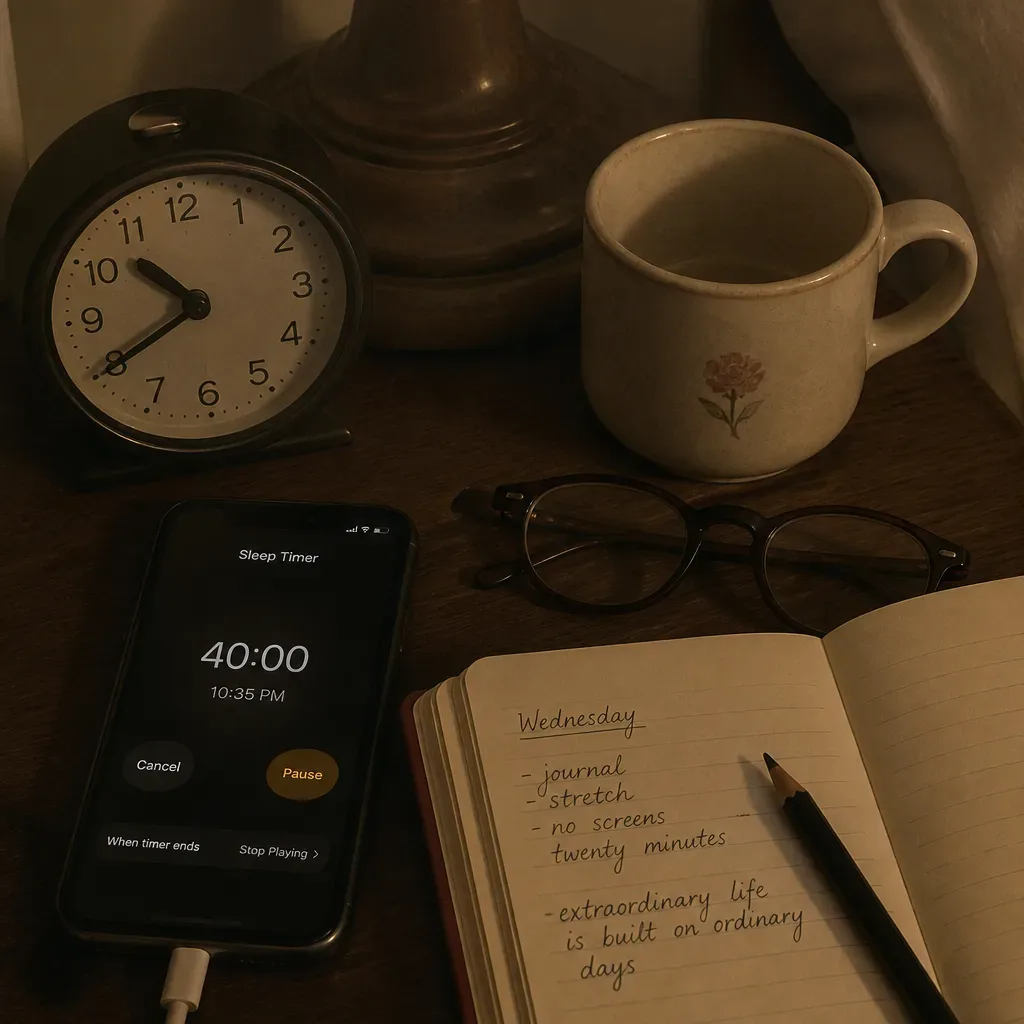
I would use a sleep timer first, because a contained practice is easier to trust than a loop that keeps touching the brain after you have gone offline.
There are people who sleep well with rain sounds or soft speech all night. I am not one of them. My body hears the edge of a sentence and climbs halfway up to meet it. The next morning I feel as if someone left a drawer open in my head. When I tested all-night audio for 5 nights, my average sleep duration stayed similar, but my wake-ups increased on 3 of the 5 nights. That is not a clinical trial. It is a kitchen-table record, but those records are where a daily practice either lives or dies.
The safer middle is a timer. Fifteen to 30 minutes is enough for most short audios, and it respects the first sleep cycle. Dr. Andrew Huberman has often pointed to the importance of consistent sleep timing and light exposure for circadian rhythm. I add sound to that list gently. If the sound makes my bedtime less consistent, it loses. If it helps me cross the bridge from thinking to resting, it stays.
I also watch the content itself. A Dream-Self Moment should not bark orders at me. It should not tell me I am failing if I doubt. It should not use fear to make the desired life feel urgent. The sleeping mind is not a consent form for harsh language. I want the voice to be steady, specific, and kind enough that I would not mind hearing it while awake at 3 p.m. on a Tuesday.
For readers who are already using affirmations, I would keep the nighttime version even simpler. One sentence before bed can be enough. A short audio can be enough. More is not always devotion. Sometimes more is just anxiety wearing clean clothes.
What should the Dream-Self audio say, and what should it avoid?
The audio should describe the lived feeling and behavior of your intended self in grounded language, while avoiding pressure, threat, and grandiosity.
Neville Goddard wrote often about entering the feeling of the wish fulfilled. Joe Dispenza writes from a different tradition about rehearsing a future self until the body recognizes it. I read both with my reviewer’s scar tissue showing. The useful part, for me, is not the size of the claim. It is the rehearsal. Athletes have used mental practice for decades; a 1994 meta-analysis by Driskell, Copper, and Moran found mental practice had a positive effect on performance, especially when paired with physical practice. That pairing is the quiet hinge.
So I listen for wording that can meet a real day. Not, “Everything is perfect now.” My kitchen has never respected that sentence. I prefer, “I answer the important message before noon.” Or, “I speak plainly about what I need.” Or, “I choose the smaller promise I can keep.” The future self has to be livable, or the audio becomes theater.
The best night wording does 4 things:
- It speaks in present tense without pretending your current life is fake.
- It names behavior, not only mood.
- It keeps the body safe by lowering pressure.
- It leaves room for ordinary mornings, bad traffic, and imperfect sleep.
I avoid lines that say I must receive signs, that something terrible will happen if I miss a night, or that my doubt cancels the practice. Pew Research Center reported in 2018 that about 62% of U.S. adults hold at least one New Age belief, including spiritual energy in physical things or psychics. Belief is common. That does not mean every belief-based product is careful with people.
I keep a plain editorial rule: If a sentence would sound manipulative from a person in daylight, I do not want it whispering near my bed.
Can this help with anxiety, or can it make sleep worse?
It can soothe anxiety when it is gentle and familiar, but it can make sleep worse if it becomes monitoring, pressure, or self-surveillance.
This is where I had to be honest. Some nights I was not listening to ask for a new pattern. I was listening to avoid feeling uncertain. The difference is small from the outside and large from inside the chest. A 2020 review in Sleep Medicine Reviews connected insomnia with cognitive arousal, especially repetitive thinking at bedtime. If audio reduces the loop, it may help. If audio becomes another loop, it may hurt.
I noticed 3 warning signs in my own use. First, I started checking whether the audio “worked” the next morning. Second, I replayed it because I was afraid one listen had not counted. Third, I felt vaguely guilty on nights I fell asleep too soon. That was my line. I took 4 nights off and used only a fan and a paper book. Nothing terrible happened. That is data too.
People with trauma histories, panic, obsessive thoughts, or sleep disorders may need more care than a blog post can provide. The National Institute of Mental Health notes that anxiety disorders affect about 19.1% of U.S. adults each year. That number is not small. If nighttime suggestion makes symptoms louder, I would move the practice to morning or early evening and talk with a clinician if sleep keeps fraying.
There is also the body to consider. Earbuds can irritate the ear canal. Loud sound can risk hearing over time. Blue light from the phone can delay sleep if I start adjusting settings in bed. The audio may be the method, but the device is still a device. I have to design around my weakest behavior, not my best intention.
The line I wrote after that week was this: A safe practice leaves me more available to the next day, not more dependent on the night before.
How do I know if sleeping with manifestation audio is working?
I know it is working when my waking behavior becomes a little more consistent, not when the night feels mystical or dramatic.
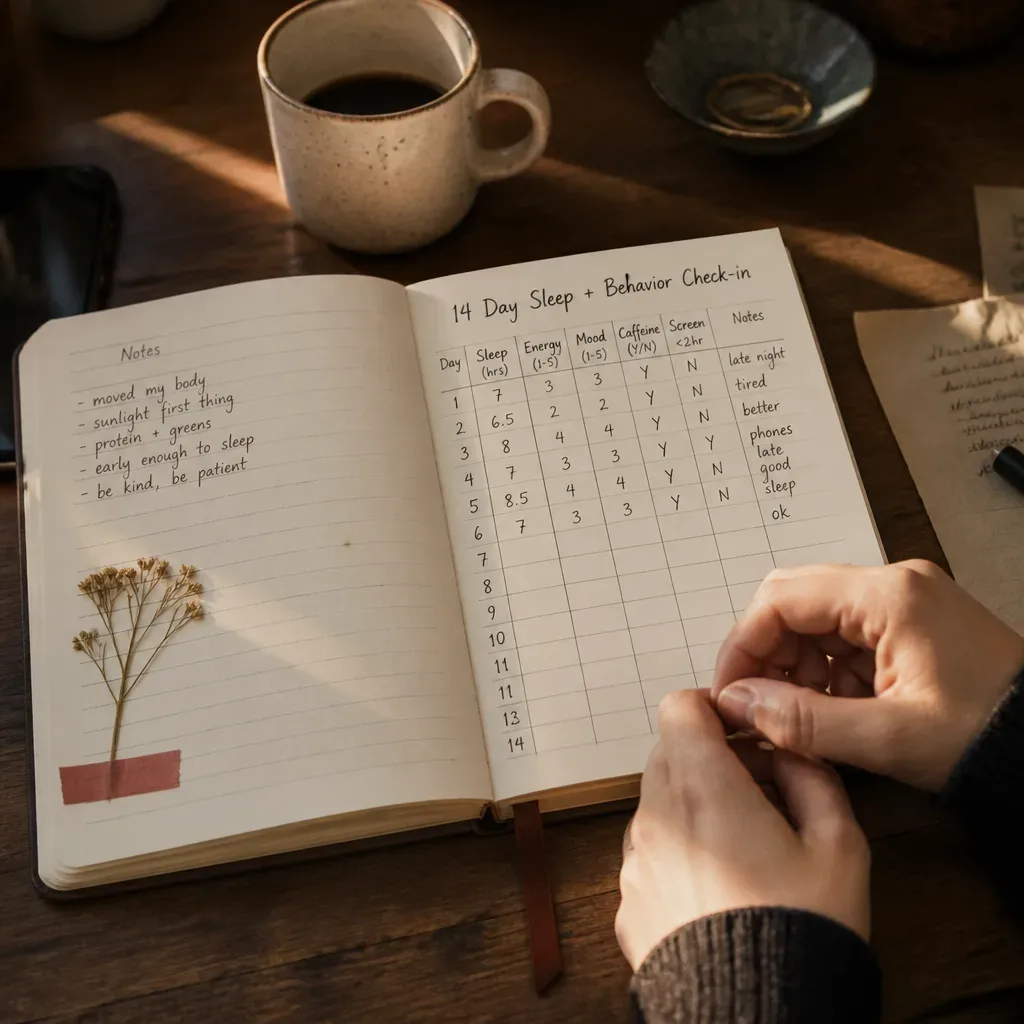
I keep this unromantic because unromantic measures are harder to fool. For 14 days, I track 4 things in the margin of my notebook: bedtime, whether I listened, sleep quality from 1 to 5, and one daytime behavior connected to the audio. If my Dream-Self Moment says I handle money calmly, I look for the receipt I did not avoid. If it says I speak clearly, I look for the message I sent without rewriting it 11 times.
This is where astrology and manifestation can be useful for some readers as a timing lens, but I do not let timing replace behavior. A new moon note is a note. A listened-to audio is a practice. A sent email is evidence. The chain needs at least one link made of action.
Here is the 14-day check I use:
| Question I ask in the morning | What counts as a good sign |
|---|---|
| Did I sleep at least close to my normal amount? | The practice did not steal rest |
| Did I wake with less mental noise? | The audio helped settling |
| Did I do one matching behavior today? | The suggestion met the day |
| Did I feel pressured to repeat it? | If yes, I simplify |
| Would I recommend this exact routine to a tired friend? | If no, I adjust it |
The older I get, the less I trust intensity. I trust what repeats without drama. The Princeton Engineering Anomalies Research program, often called PEAR and closed in 2007, studied mind-matter questions for nearly 28 years and remains debated. I mention it because people bring it up in manifestation circles. My own bar is lower and stricter: did the practice change how I placed my attention and what I did next?
If you want a broader base before trying sleep audio, start with the manifestation pillar, then come back to night use with a smaller appetite. If your language is the part that needs care, the affirmations pillar is worth reading before recording anything. And if you practice the audio path, return to the AYA Method when you want the simplest definition: listening is the practice.
The proof of a night practice is not the dream; it is the next ordinary hour you handle differently.
Sunday now. The fan is still on, and I am setting the timer for 20 minutes.